Oct 13, 2026Guides
Stated Claims and Certified Reports: Reading a Windproof Roller Blind Specification
Review stated claims and certified reports for a windproof roller blind: understand grade 8 and 10 ratings, fabric tear strength, and submittal docs.
In exterior blind submittal schedules, technical figures are manufacturer-stated factory ratings rather than project-specific certified wind-pressure test reports. A specification package records stated grades for wind, fabric tear resistance, fire retardancy and light fastness, while site-specific structural verification remains with project engineers. Knowing what paperwork accompanies each model is what lets a specifier use these figures accurately.
Stated Claims and Certified Reports
A submittal package turns product figures into project documents. For this range, the figures that go into one come with a specific status: they are manufacturer-stated classifications, not certified test reports for a given installation. Reading that distinction correctly is what lets a specifier use the numbers with confidence and without overstating them.
The stated numbers are factory ratings, not results certified for a given project. That is the frame for everything in this article: each figure below is quoted as stated, with its boundary spelled out beside it.
The two kinds of assurance behave differently in a project file:
- A stated figure describes the range as classified by the manufacturer: manual models at grade 10, motorized models at grade 8, and the fabric values further down this article.
- A certified report is project-specific, produced for an individual project.
Stated figures can be used in project documents, provided they are identified as factory ratings rather than certified results. Formal structural verification, where a project needs it, sits with the project side.
Keeping the two apart in writing is the practical point. A schedule that labels its figures correctly moves through review without either side having to guess what was claimed.
In a submittal, the label does the explaining. A figure recorded as manufacturer-stated needs no conversation to be understood correctly; the same figure recorded bare reads as more than it is. The sections below keep the label attached to every value, so each entry can move into a project file as it stands.
The Claims, as Stated
Five performance claims appear again and again in specifications for this kind of blind: wind, tear strength, flame behaviour, light fastness and weather exposure. Each one has a stated figure and a boundary, and both belong in the record.
Wind resistance is stated at grade 10 for the manual models and grade 8 for the motorized models. The grades are classified by the manufacturer rather than certified for a specific project; the mechanics behind them and the limits that go with them are covered in the guide to windproof grade 8 outdoor roller blinds.
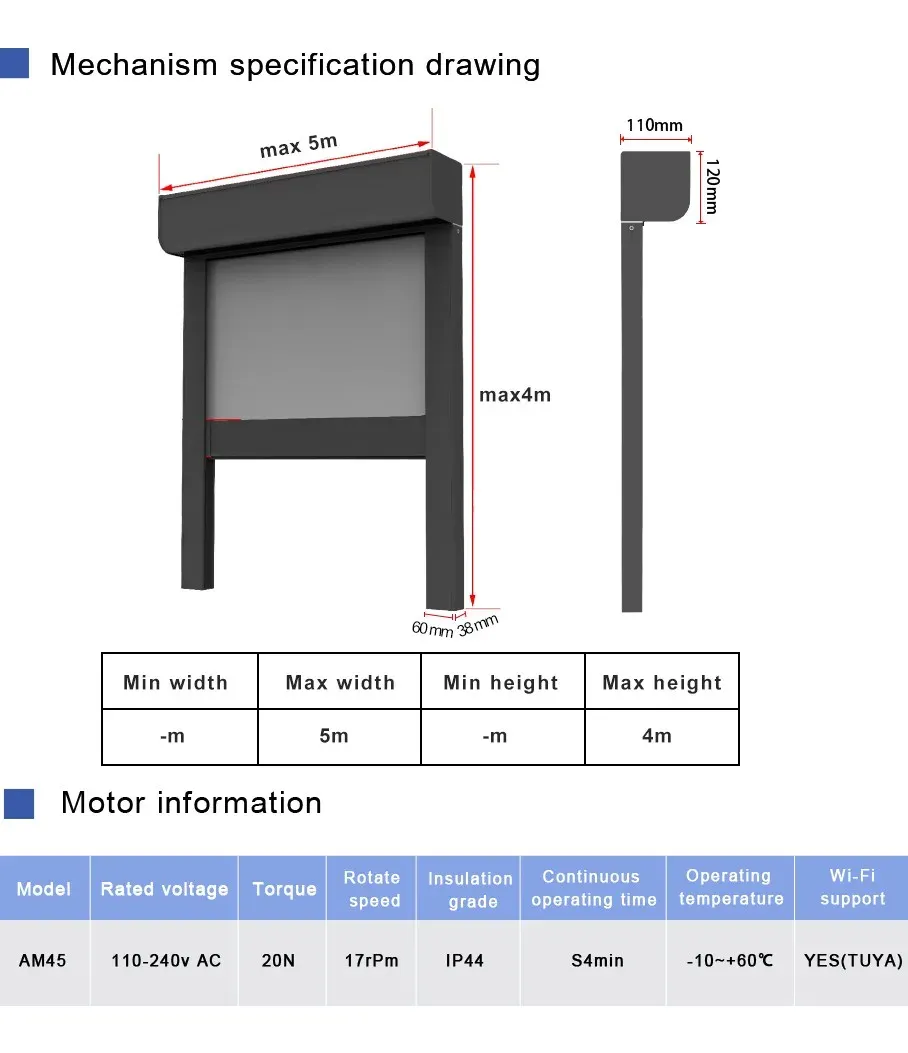
The stated tear resistance is ≥2650 N/5 cm in the warp direction and ≥2450 N/5 cm in the weft. How those figures are read, and what they do and do not cover, is set out in the wind rating article linked above, while the material context sits on the features page.
Flame behaviour is stated as fire and flame retardant, and the range carries a stated B1 fire-retardant classification. Confirm the exact class for your chosen fabric and model when the fabric is selected for a project.
Light fastness carries an ISO 105 B02 Grade 8 figure, a measure on its own scale, separate from the wind grades. What that means for a facade over time, and how to plan reorders around it, is covered in the guide to outdoor roller blind fabric colours.
Weather exposure carries the clearest boundary of the five: the range makes no IP rating claim and no storm-proof claim. The stated surface properties cover water, oil and wear resistance. When to leave a blind out and when to retract it is set out in the guide to outdoor blinds in rain, snow and coastal weather.
The five entries are short by design. What a specifier does with them is place each one beside the note that keeps it honest: stated, per model, and checked against the site by the project side.
What Comes with a Model
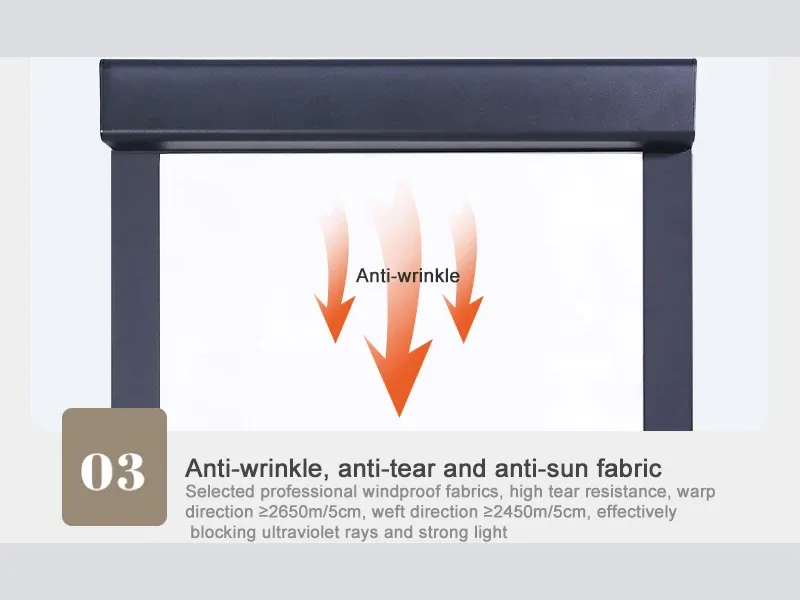
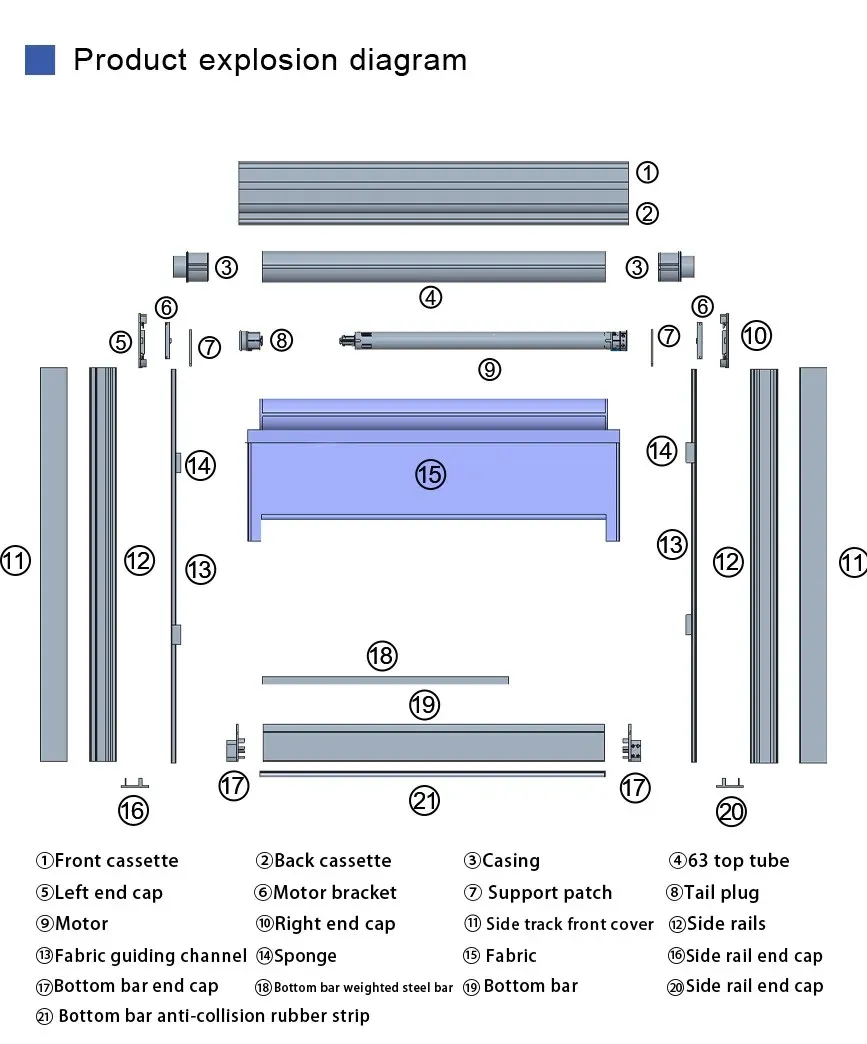
Every model carries its own drawing set, published on its product page. The parts are worth naming, because specifiers ask for them by name.
- Exploded view: the assembly broken down into labelled parts, from the cassette to the side rails and bottom bar.
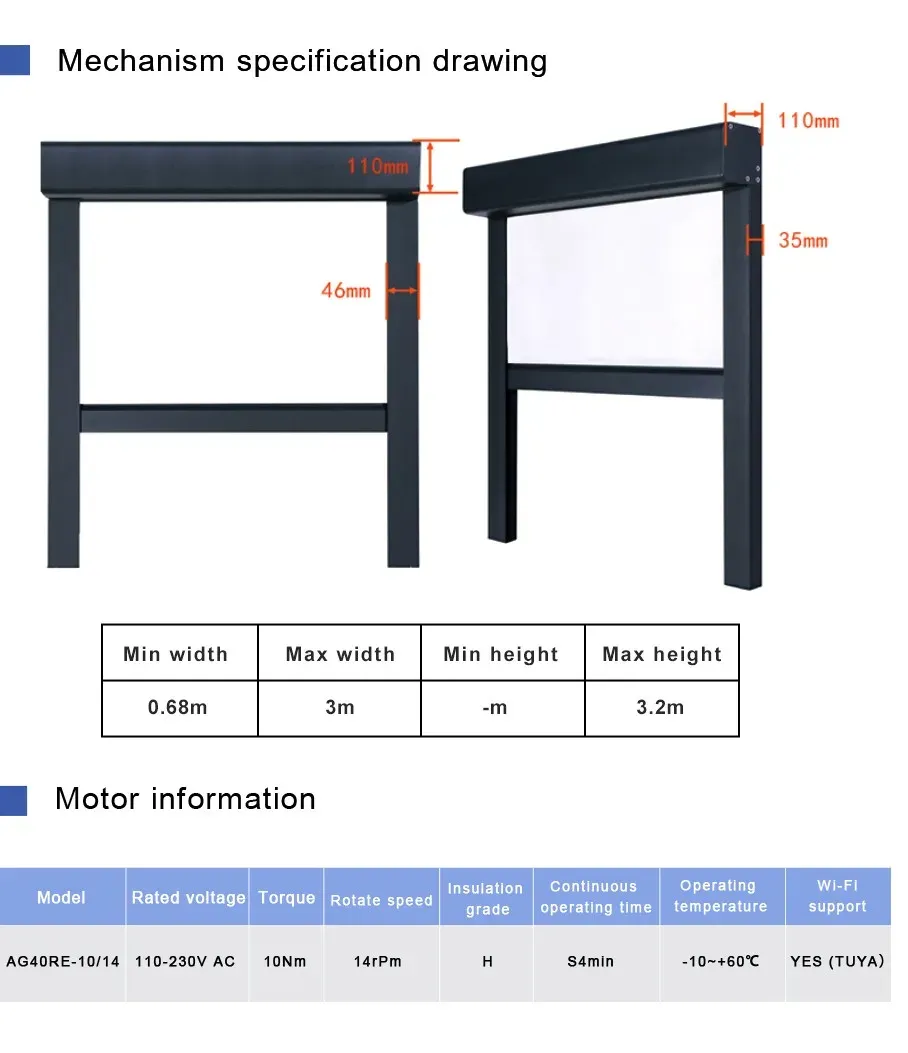
- Mechanism specification drawing: elevation views of the assembly with dimension callouts.
- Size table: the width and height figures for the model.
- Motor specification: the drive parameters for motorized models.
- Profile cross-sections: the sectional drawings of the cassette, side rails and bottom bar.
- Catalogue product information table: one summary block per model, covering the materials for the track, bottom rail and fabric, the fabric type, the windproof grade, and the fire-retardant standard stated for the model.
The drawings answer practical questions in the order they come up: what the blind is made of, how it is dimensioned, and how the tracks sit in the opening. The guide to windproof roller blind parts and drawings walks through them sheet by sheet.
The split is simple: the table is written the way a schedule is organised, one block per model, while the drawings describe the geometry. A project file that needs materials and classifications in one place can take them from the table; the drawings settle the fit.
What to Request, and How to Use It
Where a project needs more paper than the product page provides, the following items can be requested from the supplier.
- Engineering datasheets: the structured material and stated mechanical data for the model under review.
- Installation schematics: the mounting arrangements for the model.
- Factory pressure testing documentation: the factory record available on request for the range.
- Per-model drawings: the drawing set for the exact model selected.
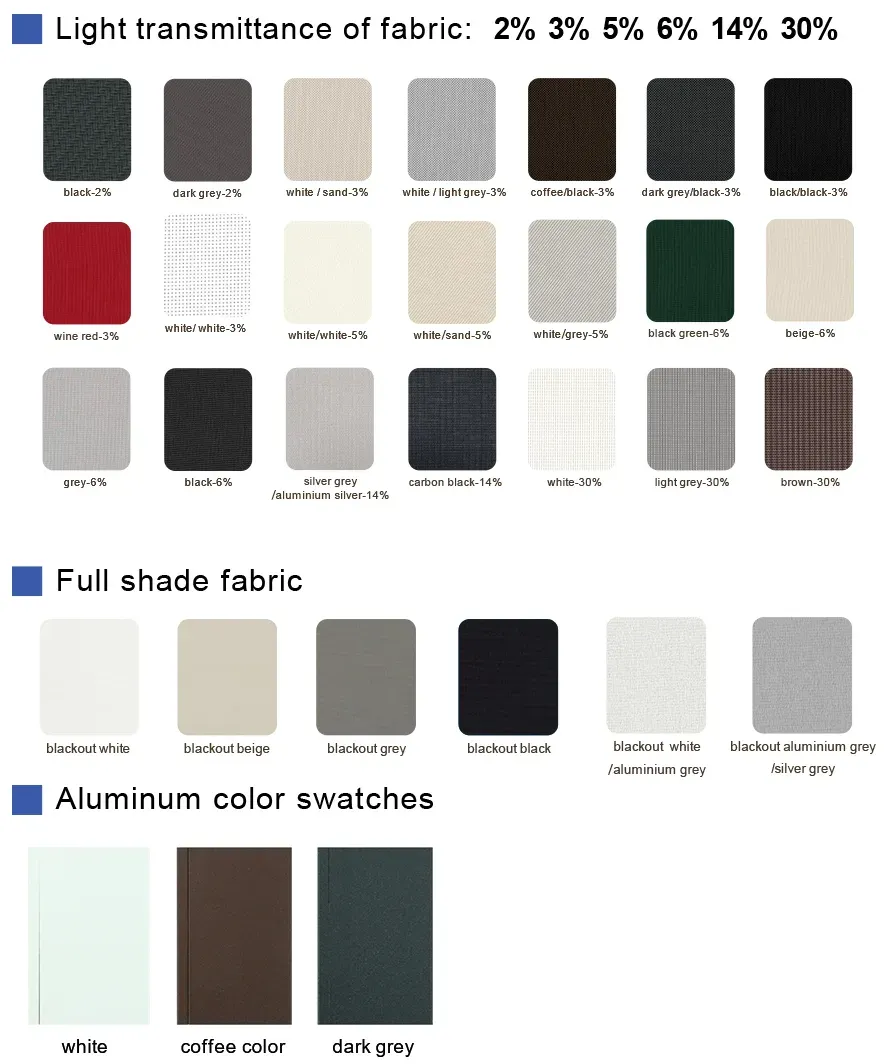
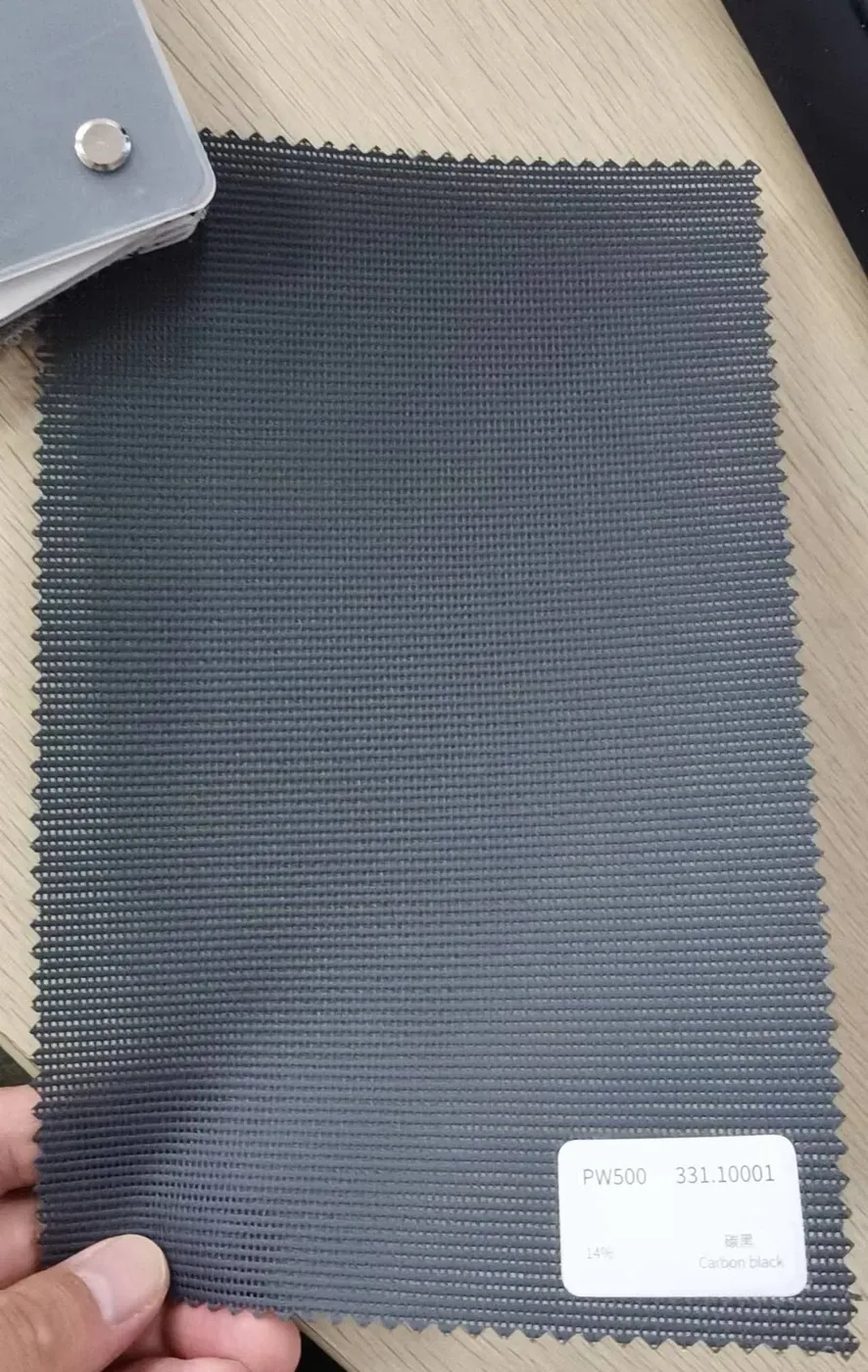
- Colour card resources: the colour card options page carries the free 30-page PDF, while physical fabric swatches are ordered for a fee by email enquiry.
Requests for samples, reports or drawings go to raymond@eziptrack.com.
The pressure testing documentation is the record to attach when a reviewer asks for more on the stated grades. The per-model drawings do the same job for geometry: they show the unit proposed for the opening rather than a general example.
In the submittal itself, attribution is the working detail: record each value as manufacturer-stated, with its grade or figure beside it, so a reviewer can see at a glance what was claimed and by whom.
Attach the drawings and the product information table, and keep the site-specific questions on the project side.
Documentation FAQs
How are the grades verified?
The grades are manufacturer classifications, not certified results for a project. Where formal structural verification is required, specifiers should assess site conditions and local building codes directly.
What weather ratings does the fabric carry?
The range carries no IP rating and no storm-proof status. The stated surface properties include water, oil and wear resistance. The practical rules for rain, coastal air and storms are set out in the weather article.
What can be sent before an order?
Ask for the drawing set for the model under consideration, the product information table, and the colour card resources listed above. With the opening measurements added, the configuration can be confirmed before supply. Sending the opening list and the documentation in one pack keeps the review against a single set of figures.
Can I receive test reports?
For fabric samples or test reports, email raymond@eziptrack.com. This is also the route to the factory pressure testing documentation. Where a project needs verification beyond the stated figures, that testing is arranged on the project side.
How should stated figures be written into a submittal?
Record each value with its stated designation, so the schedule shows a factory rating rather than a certified result. The drawings and the product information table do the describing; site-specific verification stays on the project side. If the review needs anything else alongside the schedule, note it with the opening list so it arrives in the same pass.
Send Your Specification
Start with the opening schedule: the measured width and height for every opening in the package.
Pair each opening with the fabric series, transmittance and frame colour you are considering, and note any documentation the project review needs. Send the list, and the configuration is confirmed before supply. A complete list is easier to confirm than a partial one, so include every opening in the package from the start.
To submit a schedule, or to request the datasheets and drawings from this article, use the contact us page or write directly to raymond@eziptrack.com.