Oct 13, 2026Guides
Windproof Roller Blind Fabrics: Polyester, Fibreglass and Blackout Weaves
Compare six fabric series across 24 colour codes for exterior windproof roller blinds, covering polyester composite, fibreglass composite and blackout weaves.
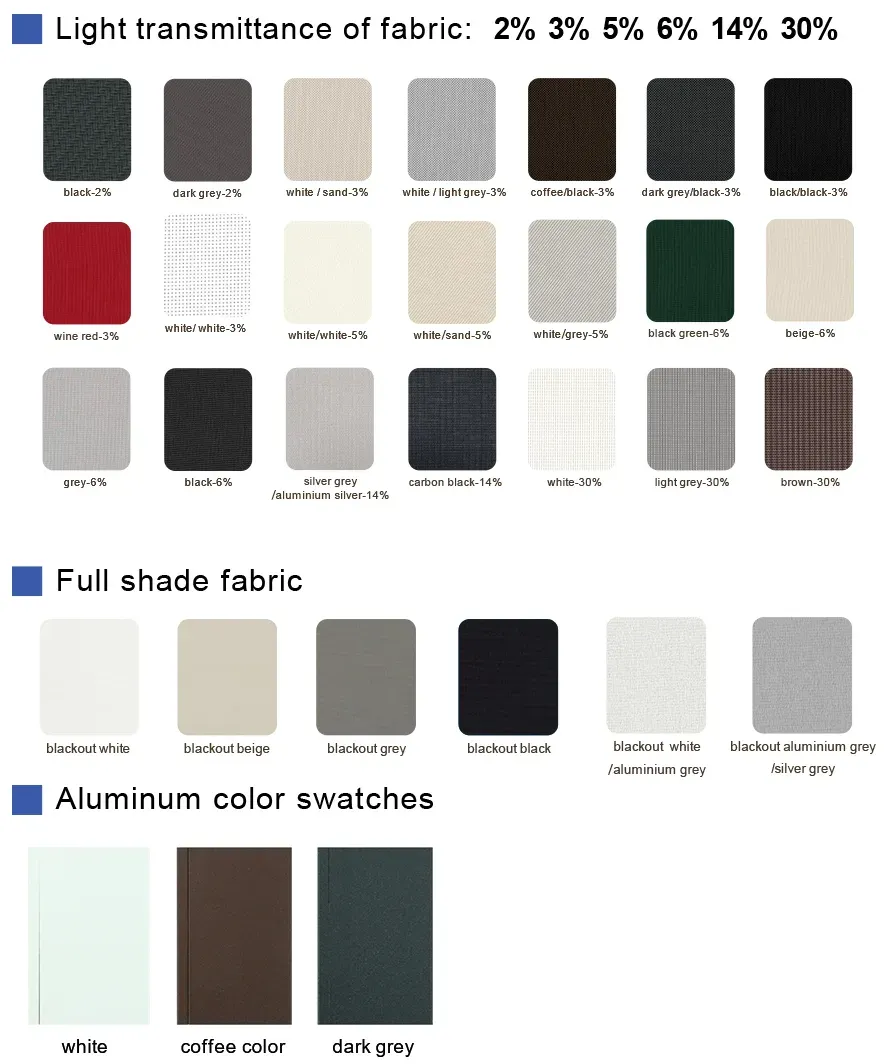
Six fabric series across 24 colour codes make up the eziptrack fabric range for exterior windproof roller blinds. The series differ in construction, weave and colour range, and reading the stated entries together is how a specifier matches a weave to an opening.
How the Fabric Range Is Organised
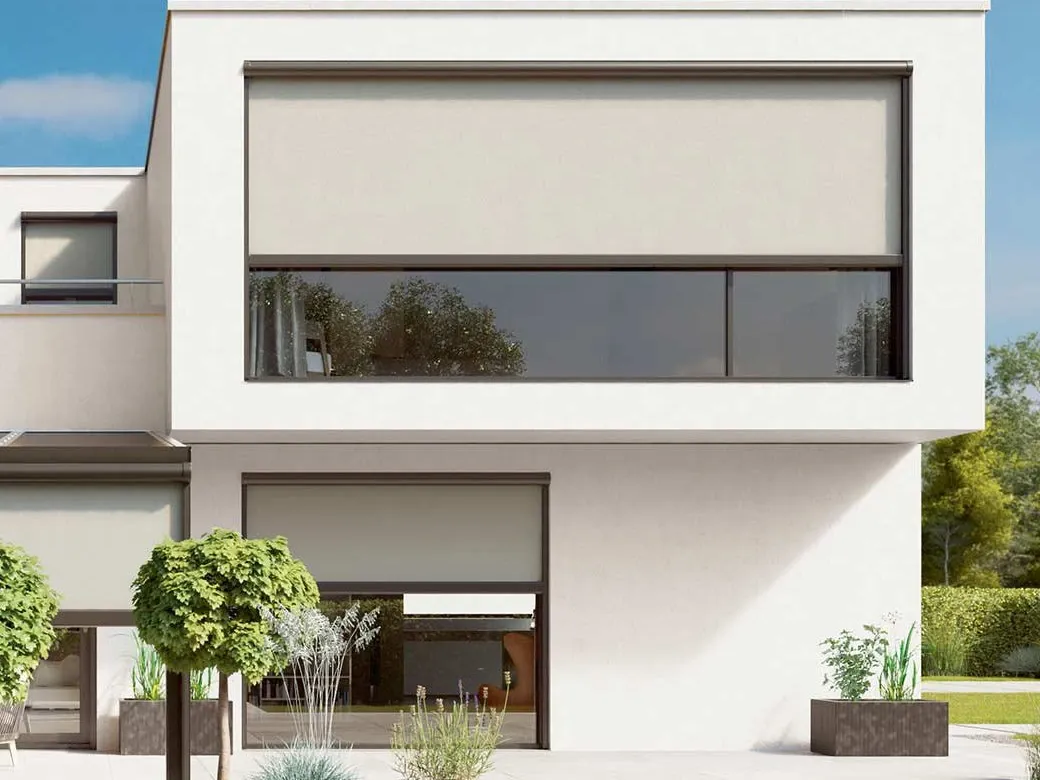
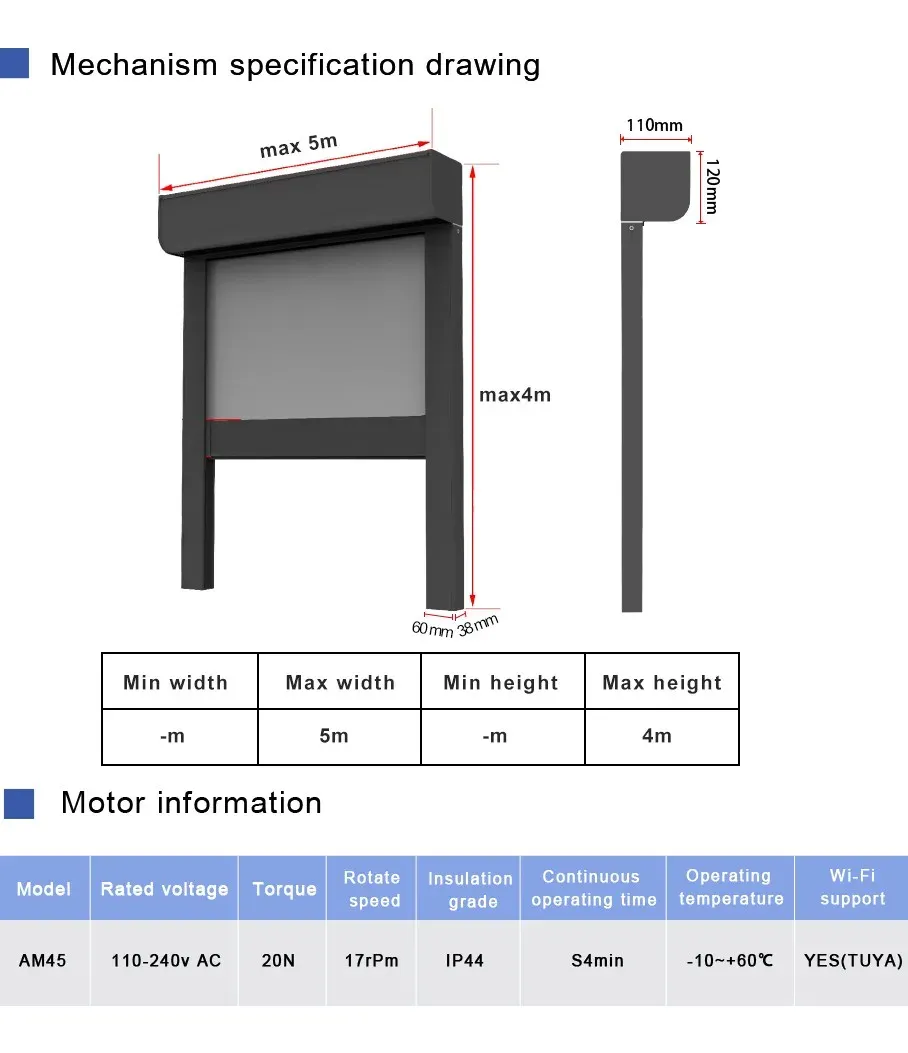
The eziptrack colour card covers six fabric series and 24 colour codes, with cassette frames available in dark grey, white or coffee. All six series run on the same side-rail system, where zipper-guided fabric edges are held inside aluminium alloy tracks. Choosing a weave is therefore a decision about light, glare and view per opening, made within one system.
Materials are listed in two fabric types, shading and light transmission, with solid blackout available for full light exclusion. Fabric across the range includes polyester, fibreglass and PVC, and every series and colour code appears in the downloadable PDF catalogue. Each series then carries its own openness rate and colour range, set out below.
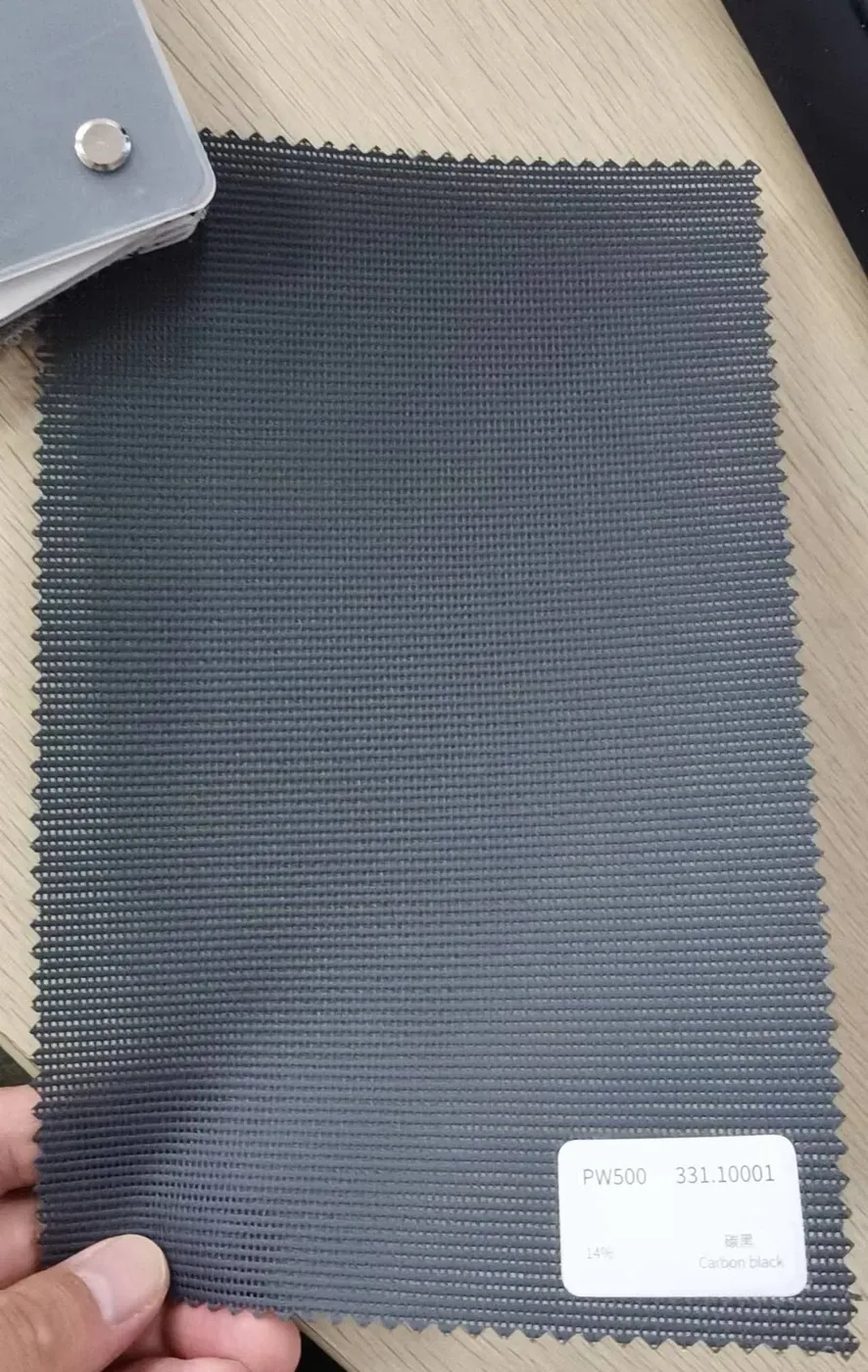
The colour card page presents photography across all six series and 24 colour codes with the weave specification for each, so buyers can compare texture, tone and light transmission before a volume order. A 30-page PDF version carries every series and colour code, the openness rate of each fabric, and the model reference pages.
Polyester Composite or Fibreglass Composite
Two composite constructions are documented across the screen series. PW100 is built on a polyester composite, while PW300 and PW400 are built on fibreglass composites.
PW100 is the polyester composite: a dense 30% polyester and 70% PVC weave that balances solar shading, daytime privacy and glare reduction. Its stated weight is 565 g/m2 (±5%) at a thickness of 0.70 mm (±5%), and the series spans six colours, including 331.02002 white sand and 331.02004 coffee/black.
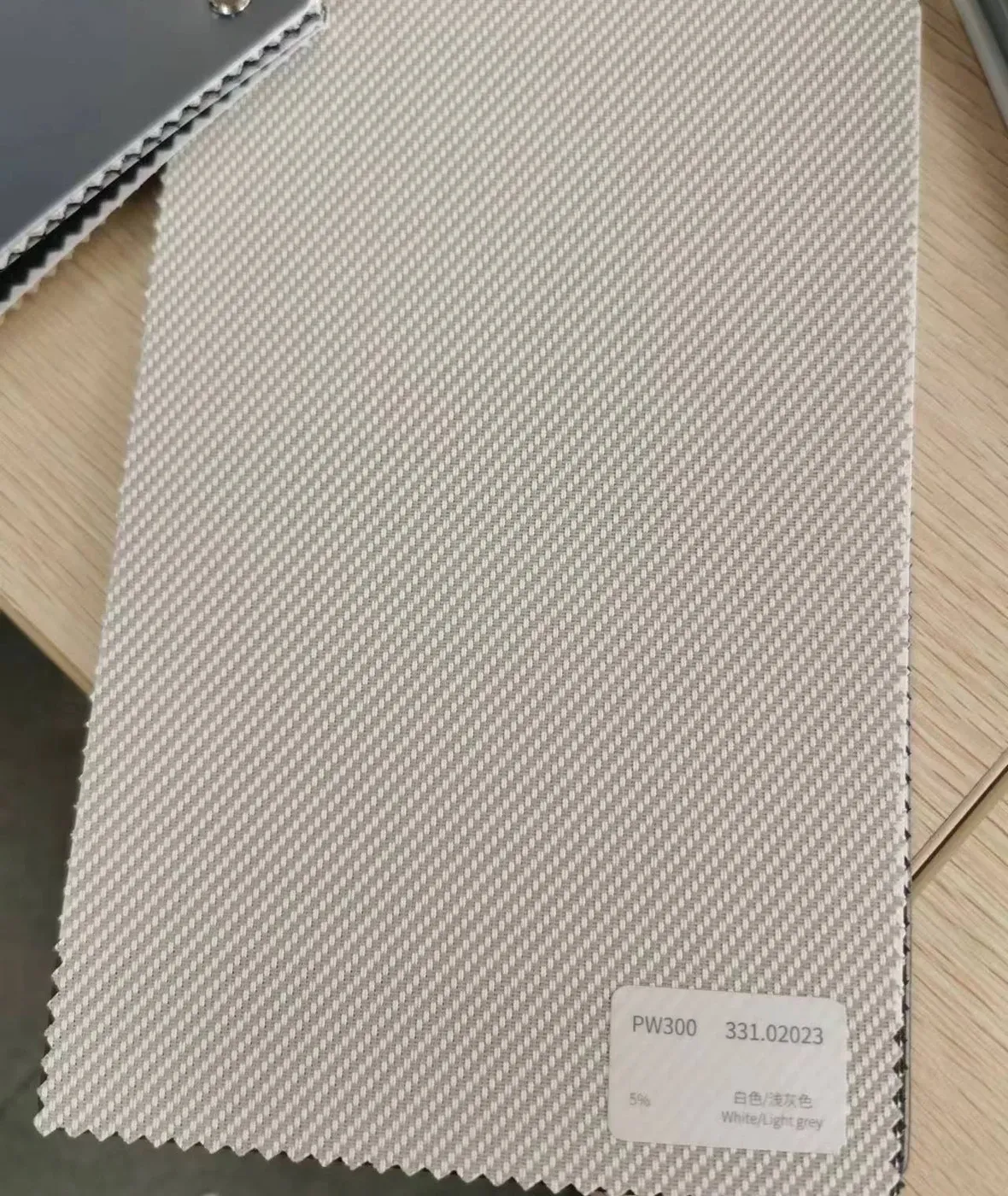
PW300 is a fibreglass composite: a 38% fibreglass and 62% PVC weave described with high dimensional stability and smooth daylight transmission. It is stated at 600 g/m2 (±5%) and 0.80 mm (±5%), across five colours including 331.02021 off-white.
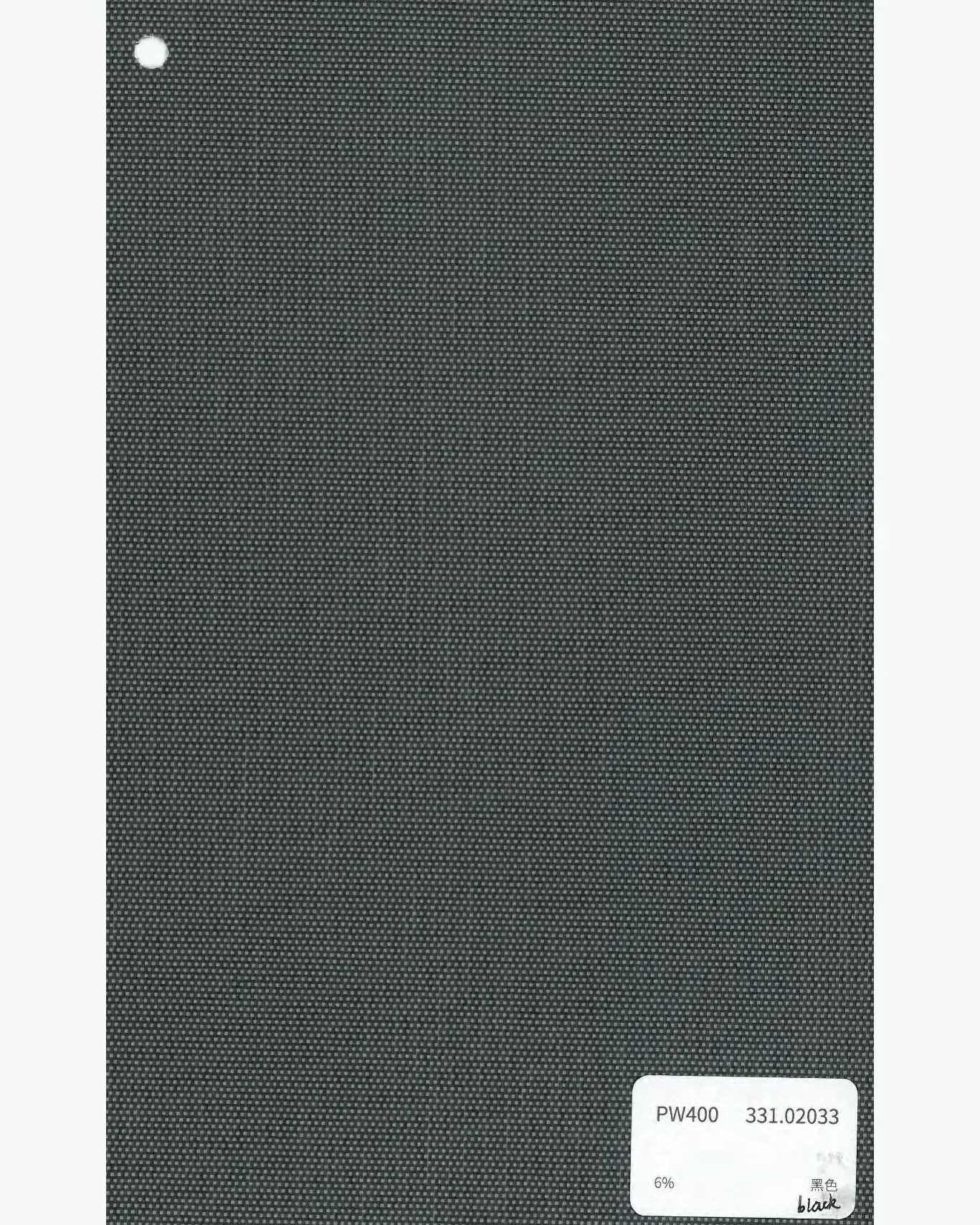
PW400 shares the 38% fibreglass and 62% PVC build and is described as a composite built for wide spans. It is stated at 495 g/m2 (±5%) and 0.62 mm (±5%), across five colours, including 331.02035 wine red and 331.02031 beige.
Read alongside each other, the descriptions draw one simple line: the polyester weave is presented around shading, privacy and glare, and the fibreglass weaves around stability and span. The colour card carries the fuller statement for each series.
The Two Blackout Weaves
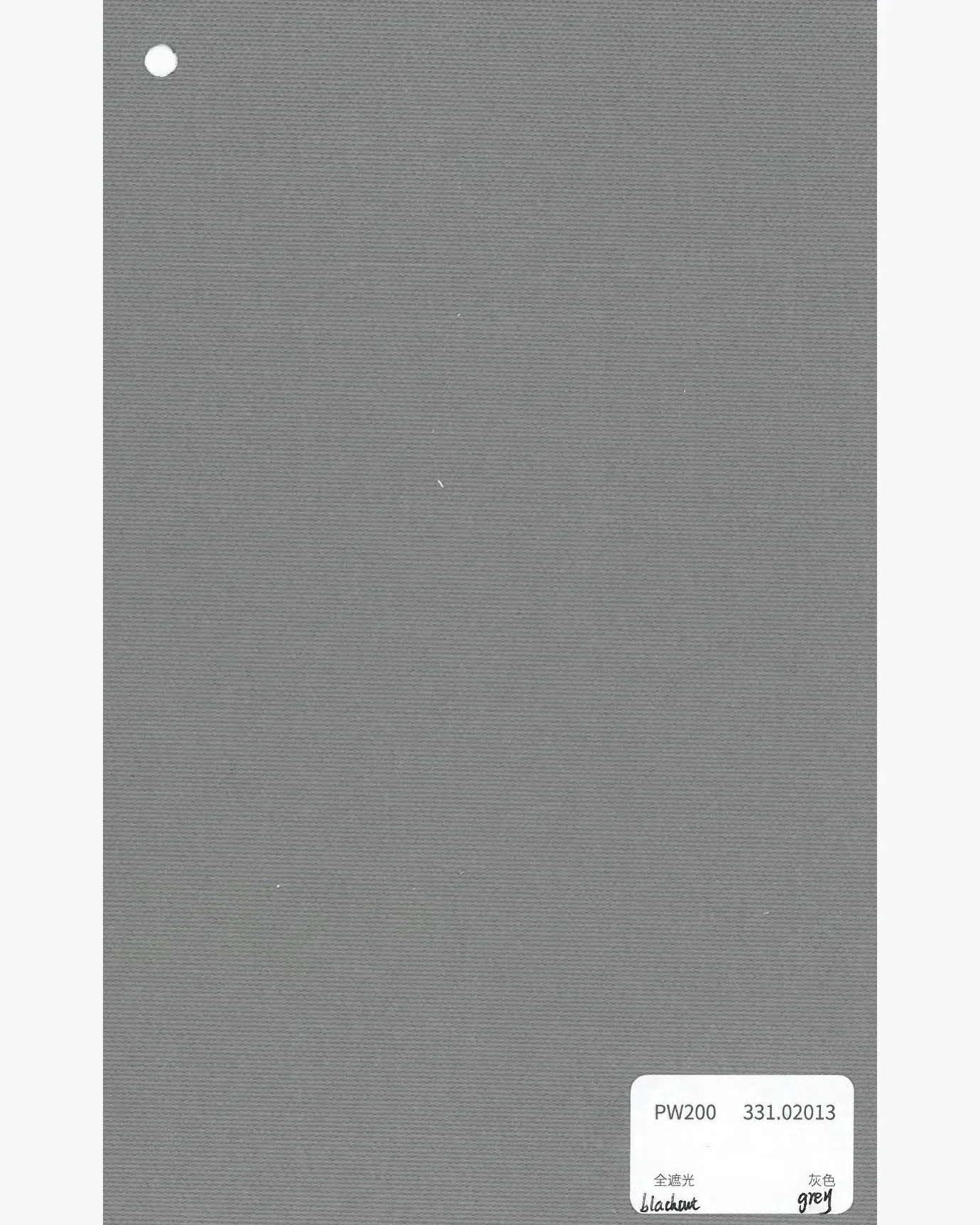
For openings that need full light exclusion, the range carries two blackout series, PW200 and PW600. Both are listed as closing the surface completely, in contrast to the screen weaves whose openness rates appear later in this article.
PW200 is described as a fully closed blackout weave for complete privacy and total daylight shutoff with no see-through. It is stated at 420 g/m2 (±5%) and 0.65 mm (±5%), across four colours including 331.02012 beige.
PW600 is the heavy blackout weave, described with high colour fastness and structural stability. It is stated at 650 g/m2 (±5%) and 0.53 mm (±5%), in two colours including 331.10010 white. Read against PW200, the two series differ in stated weight, profile and colour range: the heavier stated weight belongs to PW600, the thicker profile to PW200.
Both are stated to deliver the same result, full light block. Blackout weaves are among the options on the motorized models; sizes and openings for those units are covered in the model sizing guide.
Reading the Weight and Thickness Figures
Every weight and thickness figure in the series list carries the same published tolerance: ±5%. The tolerance is part of the specification, printed next to each value, and it is the first thing to note in the numbers themselves.
Across the six series, stated weights run from 360 g/m2 in PW500 to 650 g/m2 in PW600, and stated thickness from 0.45 mm in PW500 to 0.80 mm in PW300. In the colour card descriptions, the wording and the figures are printed together: PW600 is a heavy blackout weave at 650 g/m2, PW100 a dense weave at 565 g/m2, PW500 an open weave at 360 g/m2. The word and the number are written as one statement.
A higher stated weight is not a grade. The six series are built for different balances, and each figure describes what that weave is rather than how it ranks: the heaviest option here is the blackout weave with structural stability, and the lightest is the open weave that keeps the clear view.
Because the tolerance is part of the published specification, later references to the same series are read against the same range, not against an assumed exact figure. For the fuller specification per series, see the colour card.
The Openness of Each Weave
Each series carries its own openness rate, and the six values map the range from the tightest screen weaves to the open meshes:
- PW100: ~3% openness across six colours.
- PW200: a fully closed blackout weave across four colours.
- PW300: ~5% openness across five colours.
- PW400: ~6% openness across five colours.
- PW500: ~14% openness across two colours.
- PW600: a heavy blackout weave across two colours.
A standing guideline on the colour card is to choose colour and openness rate together. How the grades behave for view, glare and privacy is covered in the openness rate guide; how yarn tone interacts with those behaviours is set out in the colour article.
Across a facade, the rates are not always uniform: a project can carry more than one rate across different elevations, and the ordering guide sets out how a schedule records that.
Which Weave for Which Opening
Read together, the descriptions point at different openings. The family of words is small: dense, stable, wide, open, blackout.
Where glare and daytime privacy lead the brief, PW100 at ~3% is described for exactly that balance: solar shading, daytime privacy and glare reduction. Among the screen series it carries the tightest stated openness rate.
Where daylight quality leads, PW300 is the series described for dimensional stability and smooth daylight transmission, at the ~5% grade the openness guide treats as the covered-terrace baseline.
For the widest openings, PW400 is the fibreglass composite described as built for wide spans. The ZT180 covers the largest openings in the range.
Where the view out leads, PW500 is the open weave that keeps natural light and a clear outward view, at ~14% the most open stated rate in the range. And where full light block is the requirement, the list ends at the two blackout weaves, PW200 and PW600.
Fabric Series FAQs
What does the plus or minus 5% tolerance mean?
The tolerance is printed beside every weight and thickness figure: a stated 565 g/m2 may sit up to 5% above or below that number, and the same applies throughout the series list. Reading it with the figure keeps a stated value from being treated as an exact one. The full figure set per series sits on the colour card.
Which series are blackout?
Two: PW200 and PW600, at four and two colours respectively. Both are stated to deliver full light block; the figures that separate them are their weight, profile and colour range, listed in the section above. The openness list shows where each one sits.
Can an order mix weaves?
Orders are written opening by opening, so more than one series can appear on the same schedule. Each opening carries its own width, height, fabric and control entry, and the configuration is confirmed before production. How a multi-opening schedule is prepared is set out in the ordering guide.
Where can I see the weaves in person?
By email: request physical swatches for the series and colour codes under consideration at raymond@eziptrack.com. Swatch books are ordered by enquiry and carry a fee. The colour card PDF, 30 pages, is a free download and lists every series and colour code with its specification.
Which weave handles a long span?
PW400, the fibreglass composite whose description is built around span width. Its stated figures appear with the series entries above, and wider openings are where the description applies. The model pages carry the openings each size covers.
Start from the Opening
Selecting a series starts with the opening itself: its width and height, the exposure it faces, and how the space is used.
Send the width and height of every opening, with the transmittance, colour code and frame colour you have in mind. eziptrack reviews the figures and confirms each configuration before production, and provides a quotation from your opening schedule. The 30-page PDF colour card carries the full series data, and physical swatches can be requested for evaluation.
Send your opening schedule and fabric specifications through the contact us page, or write to raymond@eziptrack.com.