Oct 9, 2026Guides
Rain, Snow and Coastal Air: How Windproof Roller Blinds Handle Weather
How outdoor roller blinds handle rain, snow and coastal air: stated water-proof fabric, manufacturer-stated wind grades 8 and 10, and the limits.
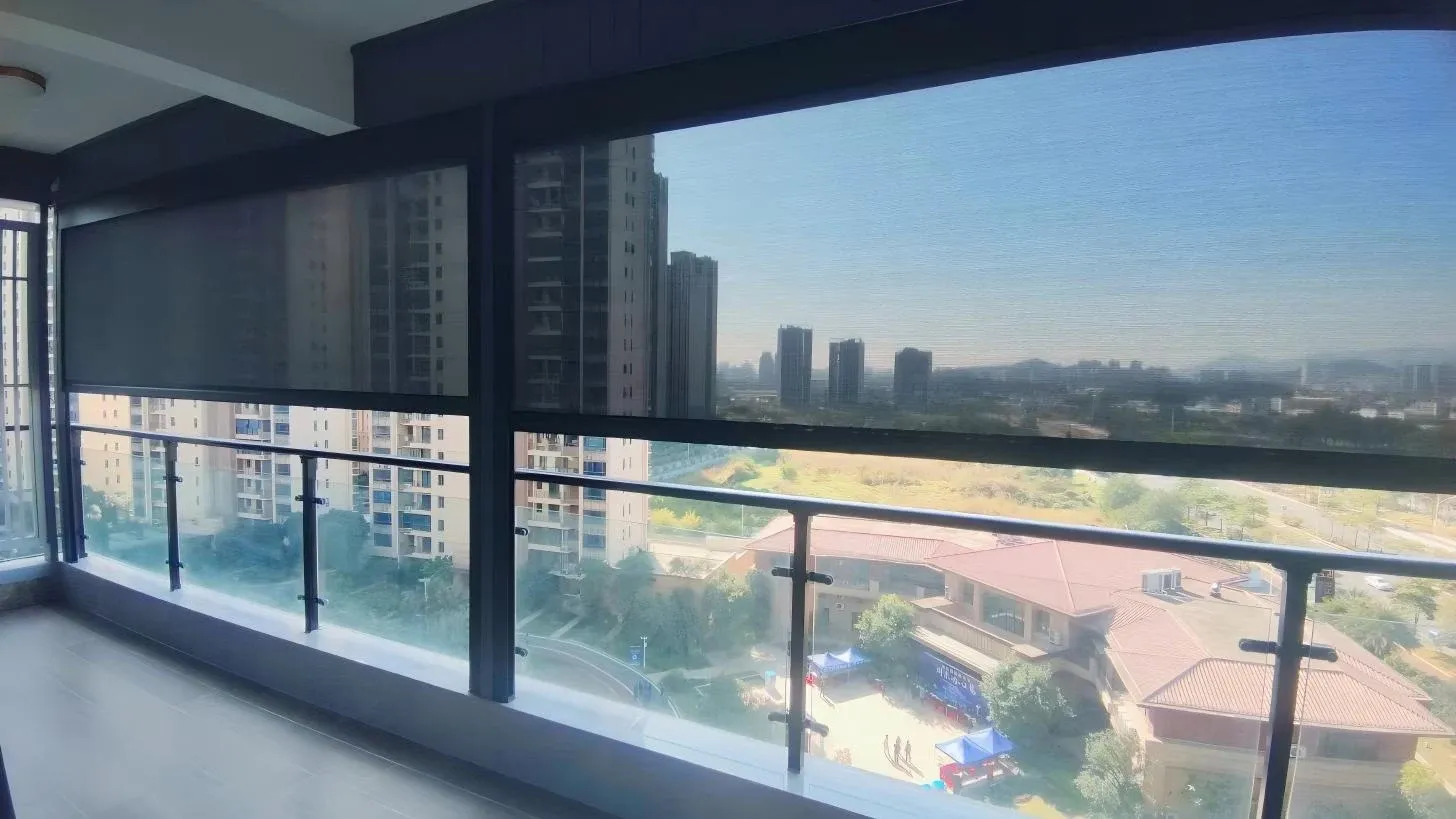
Windproof roller blinds are designed for outdoor weather: the listed benefits include windbreak and snow prevention, and the fabric is stated as water-proof, so ordinary rain is not a reason to retract the blind. There is no certified IP rating and no storm-proof claim, so severe gales, torrential storms and typhoons call for full retraction into the cassette.
What "Designed for Outdoor Weather" Covers
The phrase comes from the manufacturer's own listing, and it is worth reading exactly. The listed benefits include windbreak and snow prevention, and the fabric is stated as water-proof, so the blinds are designed for outdoor weather. The same listing adds the constraint that matters most to specifiers: suitability still depends on your model, mounting and site.
In service, that phrase covers the weather an opening actually meets. This article takes the main exposures in turn: rain on a closed blind, coastal air and salt, and snow, with sun on the fabric as the slow, visible one. The eziptrack features page documents the stated benefits and the hardware behind them, from the side rails to the cassette shell.
Take the three variables in turn. Model: the range includes motorized and manual units, and the manufacturer states a windproof grade for each, quoted in full below. Mounting: how the rails are fixed and aligned matters as much as the fabric; the installation guide sets out the checks. Site: a protected balcony, a pergola and an open coastal terrace present three different exposures, and the same unit can suit one and not another.
What the phrase does not cover is extreme events: the range claims no weather rating beyond the stated cases, and the storm case is handled by retraction, as the sections below set out. Model, mounting and site decide how each installation behaves: a manual unit on a protected balcony and a motorized unit on an exposed terrace are different installations even when the fabric is identical, and the choice across the eight models is where that specification starts.
Rain: What the Fabric Handles, and What It Does Not Claim
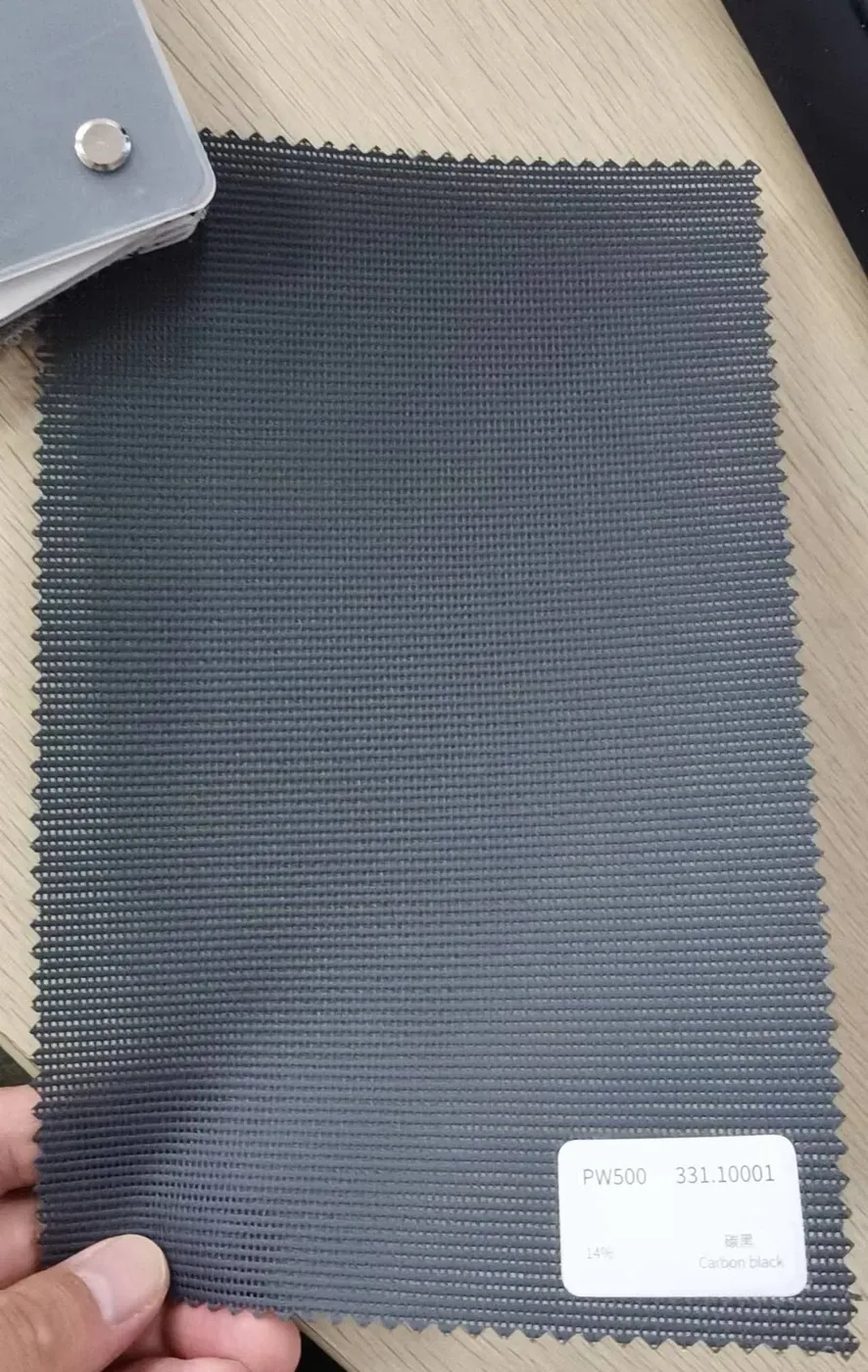
The blind can stay out in normal rain. The manufacturer states the composite fabric is water-proof and the dense weave sheds water, and that is the design case the range is sold for. On the fabric itself, water droplets bead on the grey dense-weave surface, which is stated as water-proof, oil-proof and wear-resistant; the even-dense yarn helps the surface resist water and oil.
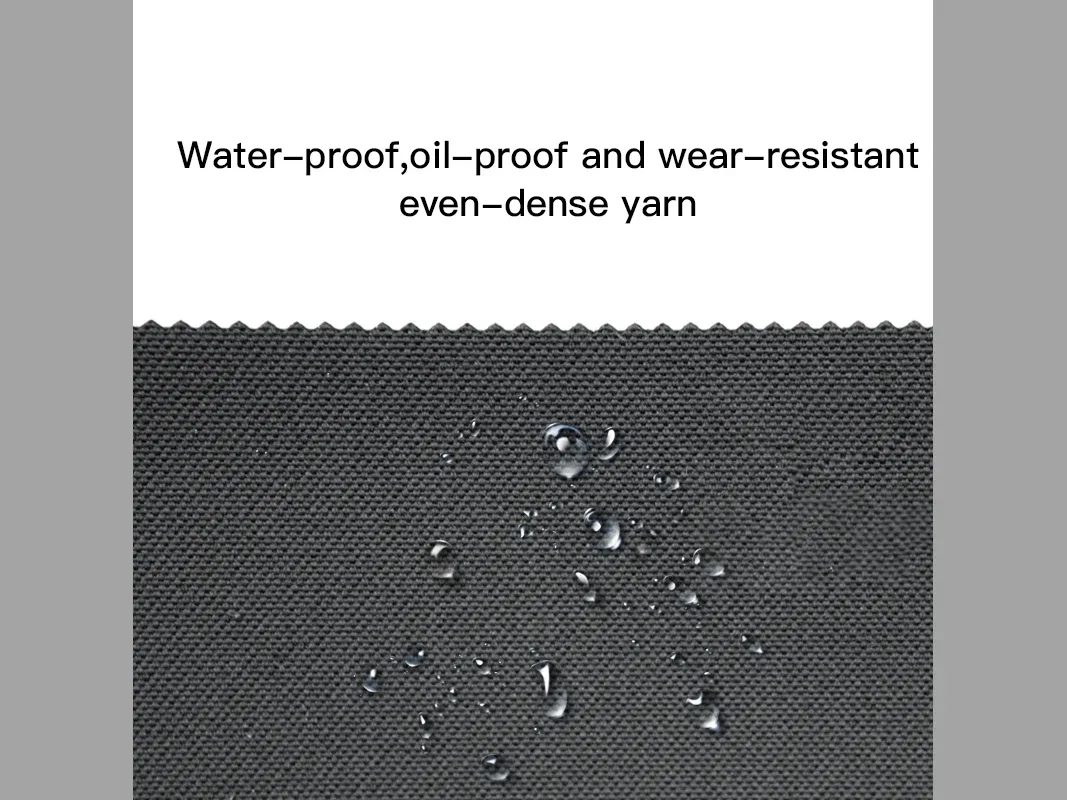
That stated benefit sits right beside its boundary: the blind carries no certified IP rating and no storm-proof claim, so in severe gales, torrential storms or typhoons it should be retracted fully into its cassette to protect the fabric and hardware. Read the two positions together and the intent is clear: a closed blind is meant to take rain, and a storm is the case where it comes in.
For specifiers, that translates into two lines for a handover note or an O&M schedule: ordinary rain is not a reason to retract, and severe weather is. Both halves belong in the same specification, and the second half is what keeps the first half honest.
Stating the boundary plainly is part of the specification too: rain performance is a statement about the fabric and the hardware, not a rating for the opening as a whole. Where a project specification requires the opening itself to carry a water-ingress rating, that requirement sits outside what this range states, and it is better to know that at quotation stage than at handover.
Snow, Wind and Salt Air: The Material Facts
Start with the hardware. The cassette and the aluminium side rails are built for wind and rain. The track and the bottom rail are aluminium alloy, and the cassette uses a one-piece die-cast aluminium alloy shell that the manufacturer states resists impact and corrosion. The zipper edge runs inside a guide strip in each side rail, so the fabric stays held along its full drop.
The fabric carries the figures. The PW100 exterior screen fabric is specified at 565 g/m² (±5%) and 0.70 mm (±5%), and the stated tear strength of the fabric is warp ≥2,650 N/5 cm and weft ≥2,450 N/5 cm. Those figures describe the dense weave whose stated properties — water-proof, oil-proof and wear-resistant — carry the rain performance set out above. The fabric is also stated as fire and flame retardant, with a stated B1 classification.
Wind performance is stated as a grade rather than measured at the window: manufacturer-stated windproof grade 8 for motorized models and grade 10 for manual models. Those grades assume a correct installation. The side rails have to be set parallel and vertical so that the fabric edge can run inside its guide strip through the full drop; the installation guide covers the checks before drilling, and the same alignment is what keeps the fabric held afterwards.
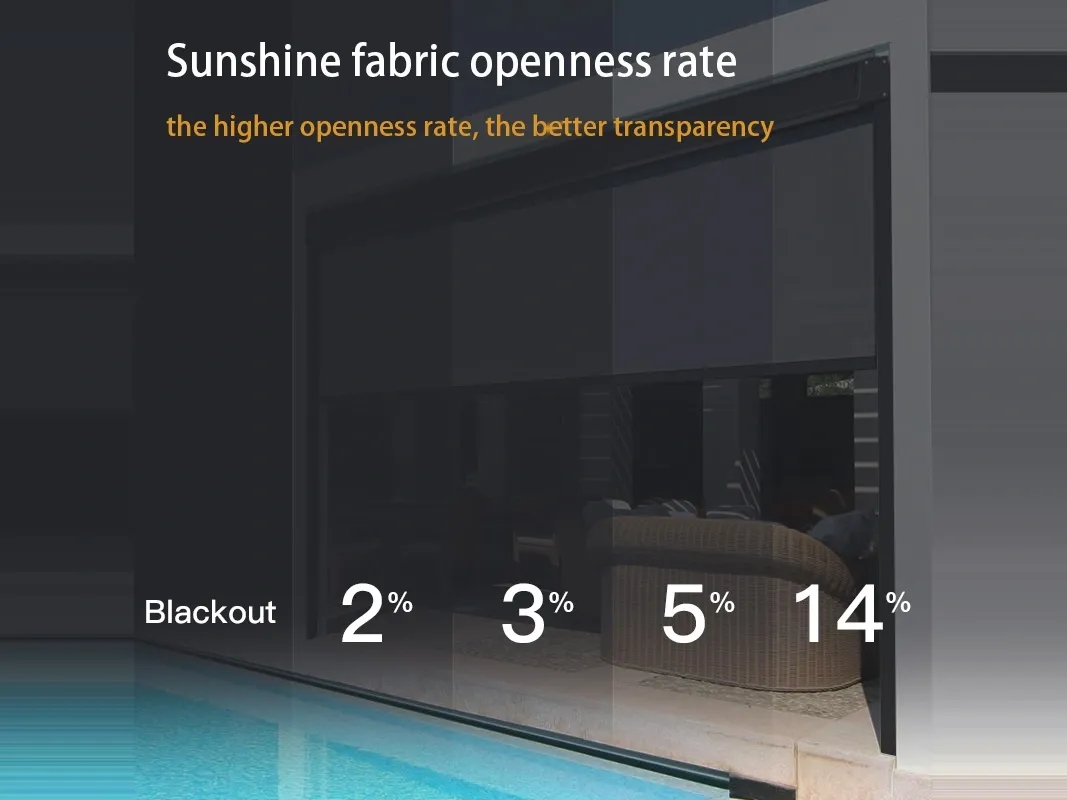
Coastal air adds salt to the exposure. The stated point for the materials is the die-cast aluminium alloy shell that resists impact and corrosion, plus the aluminium alloy rails; beyond those stated material properties, no further weather rating is claimed, so exposure is managed by the retraction rule below rather than by a rating. Fabric colour has its own documented exposure: the fabric is documented at ISO 105 B02 Grade 8 for colour fastness, which is a light-fastness measure and a different scale from the wind grades. Even so, long exposure to direct sun will eventually cause gradual fading, and how fast depends on daily solar intensity, the orientation of the opening and total hours of sun. The colour card options page shows the fabric range these figures apply to.
Snow is the last winter exposure, and it appears in the listed benefits as snow prevention, alongside windbreak. That is a stated design benefit of a closed blind rather than a structural snow-load rating, and suitability still depends on your model, mounting and site.
Reading the Weather: When to Roll Up
The operating rule is short. Leave the blind out in normal rain: the manufacturer states the composite fabric is water-proof and the dense weave sheds water. Retract it fully into the cassette ahead of severe weather, to protect the fabric and hardware.
Conditions decide, not a calendar. Retract ahead of an event rather than during it. If you are unsure whether the coming conditions sit inside the stated weather cases, retract anyway — the cassette is the protected position, and returning the blind to service afterwards is a normal operation.
Written as an operating note for a handover file, the routine reads:
- Ordinary rain: leave the blind out; the fabric is stated as water-proof and the dense weave sheds water.
- Forecast storms or gales: retract fully into the cassette before they arrive.
- Typhoon conditions: retract fully and leave the cassette closed.
- Any doubt about the conditions: retract fully and keep the blind retracted until conditions clear.
The full discipline, including how the stated grades are read and where the safety boundaries sit, is set out in the guide to wind ratings for outdoor roller blinds. This article stays on the weather side of the question: which conditions the materials are designed for, and which ones call for the blind to come in.
Weather FAQs
Can the blind stay outside in the rain?
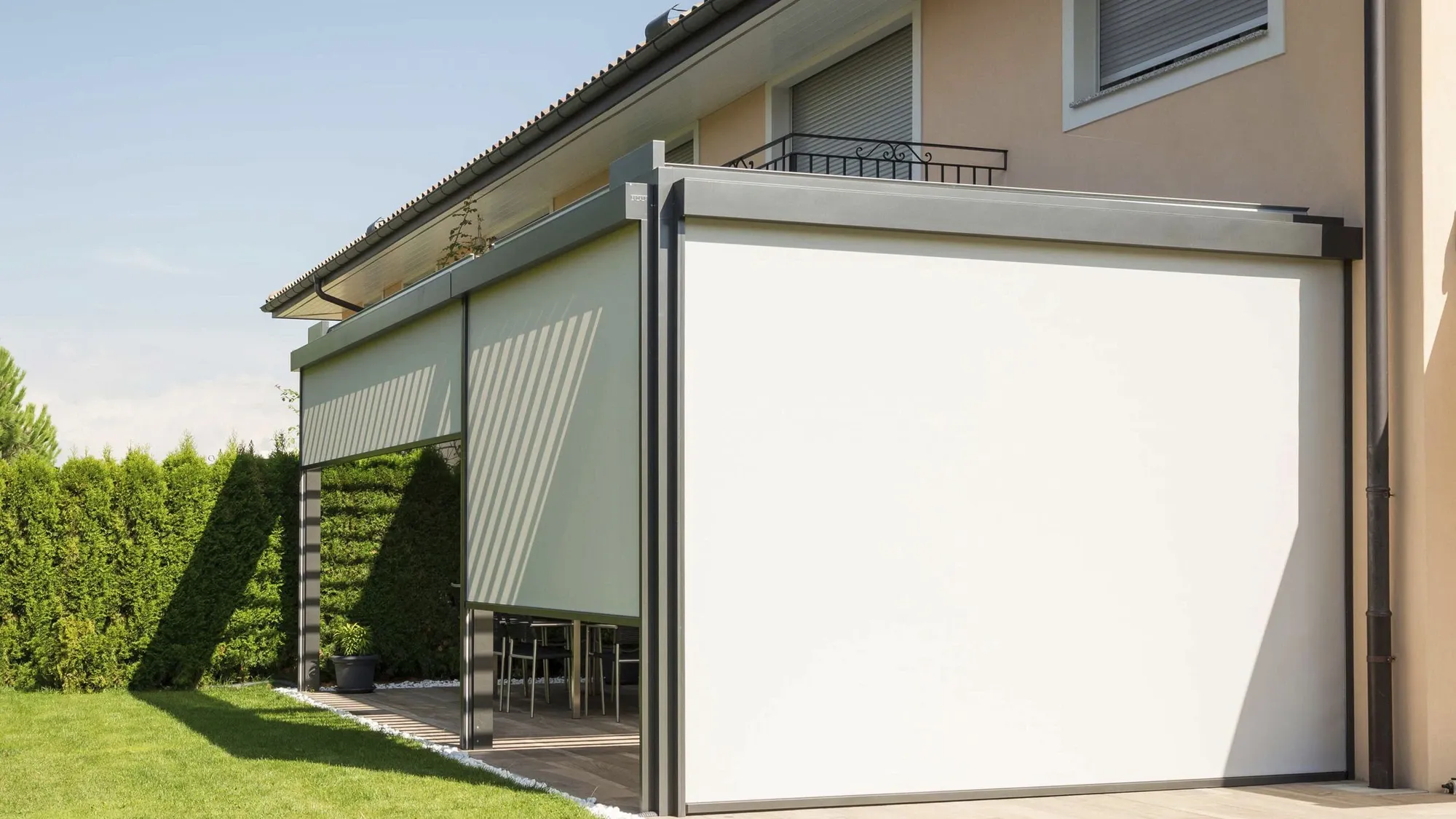
Yes, in normal rain. The manufacturer states the composite fabric is water-proof and the dense weave sheds water, so the blind can stay down while it rains. Storms are the exception: in severe gales, torrential storms or typhoons, the blind should be retracted fully into its cassette to protect the fabric and hardware. The range carries no certified IP rating and no storm-proof claim — normal rain is the case it is designed for, and severe weather is what it is retracted for.
What about snow?
Snow prevention is one of the listed benefits of the range, alongside windbreak, and the fabric is stated as water-proof, so snow is part of the outdoor-weather case the range is designed around. Treat that as a stated design benefit rather than a structural snow-load rating: suitability still depends on your model, mounting and site. If conditions go beyond these stated cases, the routine is the same as for a storm: full retraction into the cassette until conditions clear.
Will rain or salt air damage the aluminium?
The track and the bottom rail are aluminium alloy, and the cassette is a one-piece die-cast aluminium alloy shell that the manufacturer states resists impact and corrosion. That is a stated material property rather than a performance rating, and no lifespan figure is stated. For coastal installations, the practical answer is the stated material properties plus the retraction rule below, rather than a performance promise.
Do you have an IP rating?
No. The range carries no certified IP rating. The fabric is stated as water-proof and the dense weave sheds water in normal rain, and there is no storm-proof claim: severe gales, torrential storms and typhoons call for the blind to be retracted fully into its cassette. Where an IP rating is written into a project specification, plan around that answer for every model in the range.
How often should a coastal installation be retracted?
There is no fixed interval — conditions decide, not a calendar. Retract ahead of storms and gales, and retract fully into the cassette rather than part way. A coastal blind left down through ordinary rain and damp air follows the same routine as any other installation: the retraction rule above.
Specify for Your Climate
If the opening faces rain, snow or salt air, the specification conversation starts with the same three variables as everywhere in this range: model, mounting and site. Send the width and height of each opening, the preferred fabric transmittance and frame colour, and the team will confirm the configuration and provide a quotation. Measure each opening at the width and height points in the measuring method guide first, because a weather-exposed facade often carries several openings of different sizes.
Browse the windproof roller blind range to match models to your openings, and the guide to ordering windproof roller blinds for how an order is confirmed from opening dimensions to shipment. The site lists a shipment lead time of 7–15 days.
For climate-specific questions — coastal exposure, snow conditions, storm procedures — use the eziptrack contact page or write to raymond@eziptrack.com.
SEO Title: Rain, Snow and Coastal Air: Windproof Roller Blinds Meta Description: How outdoor roller blinds handle rain, snow and coastal air: stated water-proof fabric, manufacturer-stated wind grades 8 and 10, and the limits. Slug:
outdoor-roller-blinds-rain-snow-coastal-weather