Guides
How to Verify a Supplier's Wind Rating for Outdoor Roller Blinds
Learn how to verify an outdoor roller blind supplier's wind rating: the basis question, test report checks, scope matching, red flags and the paperwork to request.
To verify an outdoor roller blind supplier's wind rating, buyers must ask whether the figure reflects an internal factory classification or an independent laboratory test. Next, examine whether the test specimen dimensions match scheduled project openings, request model-specific mechanical drawings, and treat claims that lack documented boundaries or structural retention details as unverified.
What a Wind Rating Claim Actually Is
In exterior shading procurement, wind ratings are often quoted as single performance numbers. Commercial buyers frequently assume these figures represent standardized engineering guarantees. Treat any published grade as an unverified label until the supplier discloses what sits behind it. In the absence of that disclosure, buyers cannot tell a documented load limit from catalog nomenclature.
Because lateral loads channel into the tracks and anchors, the paperwork that matters covers the assembled unit rather than the fabric alone. How the zipper-guided mechanism holds those loads is covered in our technical overview of zipper-guided roller blinds.
Ask What the Grade Is Based On
When evaluating proposals, buyers must first ask what physical basis generated the published grade. Determine whether the figure represents an internal factory rating or independent laboratory testing. A factory classification signals an internal sorting of the supplier's own models by intended exposure; it does not by itself verify physical load limits. Distinguishing between factory classifications and independent laboratory tests ensures procurement teams base commercial risk assessments on verified structural data. For an engineering breakdown, consult our detailed engineering analysis of outdoor blind wind grades.
Inquiring about rating baselines also extends to how drive types are quoted. Some ranges list one grade for manual versions and another for motorized versions of the same product. Whatever the split, each figure is only as comparable as its disclosed basis, so the basis question belongs to every number in a quotation, not just to the headline grade.
What a Test Report Should Show
When a supplier asserts documented laboratory evidence, buyers must audit the actual testing paperwork. A credible report identifies the testing facility, evaluation date, and operational parameters. The paperwork should describe the test fixture, confirming whether the unit was bolted to a rigid steel frame or realistic facade mock-up.
The most critical data point is the physical span width and drop height of the test specimen. Structural deflection multiplies as spans widen. An assembly that withstands pressure on a narrow test specimen can fail when the same design is stretched across a wide commercial span. Accepting test documentation for an undersized prototype leaves expansive architectural openings vulnerable to unexpected perimeter failure under real-world wind loading. Buyers must verify the tested dimensions match or exceed the scheduled openings.
A complete test report defines monitored failure criteria during pressurized air cycles. The document must disclose whether testing tracked fabric blowout, aluminum profile bending, bracket fastener shear, or motor stalling. Reports stating "passed" without publishing applied pressure levels, deflection figures, or operational observations provide little verifiable engineering value.
Match the Paper to the Unit You Are Buying
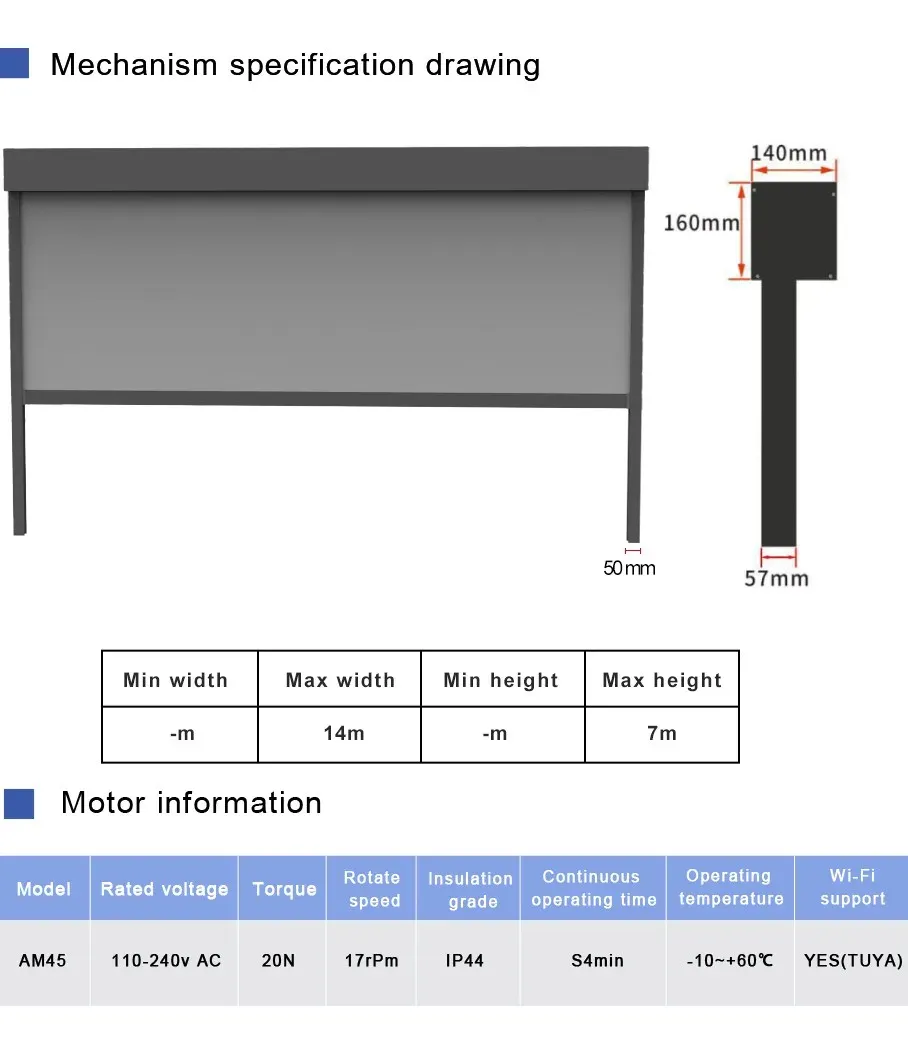
A common procurement error involves accepting engineering paperwork from an entirely different hardware line. Cassette depths, tube diameters, and track thicknesses vary across model tiers. Buyers should demand per-model drawings rather than generic catalog sheets, and should check that the sheets name the model being quoted.
Matching documentation to scheduled units also extends to the mounting surface. Zipper-guided screens transfer lateral loads into the structure behind the rails, so the substrate deserves the same scrutiny as the paperwork. Confirm what the supplier expects the rails to be fixed to before the order is placed. For practical verification workflows and submittal practices, review our structural opening measurement guide alongside our comprehensive architectural submittal documentation guide.
Red Flags That Should Pause an Order
Certain supplier claims should immediately pause an order. The most dangerous red flag is claiming outdoor blinds are storm-proof or suitable for hurricanes without operating limits. A supplier marketing a fabric screen as storm protection, with no retraction limits disclosed, is overstating what the product category is built to do.
A second red flag is substituting fabric tear certificates for assembled system performance. Vendors often present laboratory sheets showing high tensile figures, claiming strong fabric guarantees wind resistance. However, blinds fail if zipper weld seams tear or tracks flex open. Fabric data cannot replace whole-system mechanical retention documentation.
A third red flag is reluctance to provide model-specific engineering drawings before receiving a deposit. If a vendor supplies only low-resolution promotional brochures or avoids questions on maximum span boundaries, buyers should exercise caution. Dependable manufacturers supply structured technical sheets and dimensional tables to support accurate submittal schedules.
How This Range States Its Own Figures
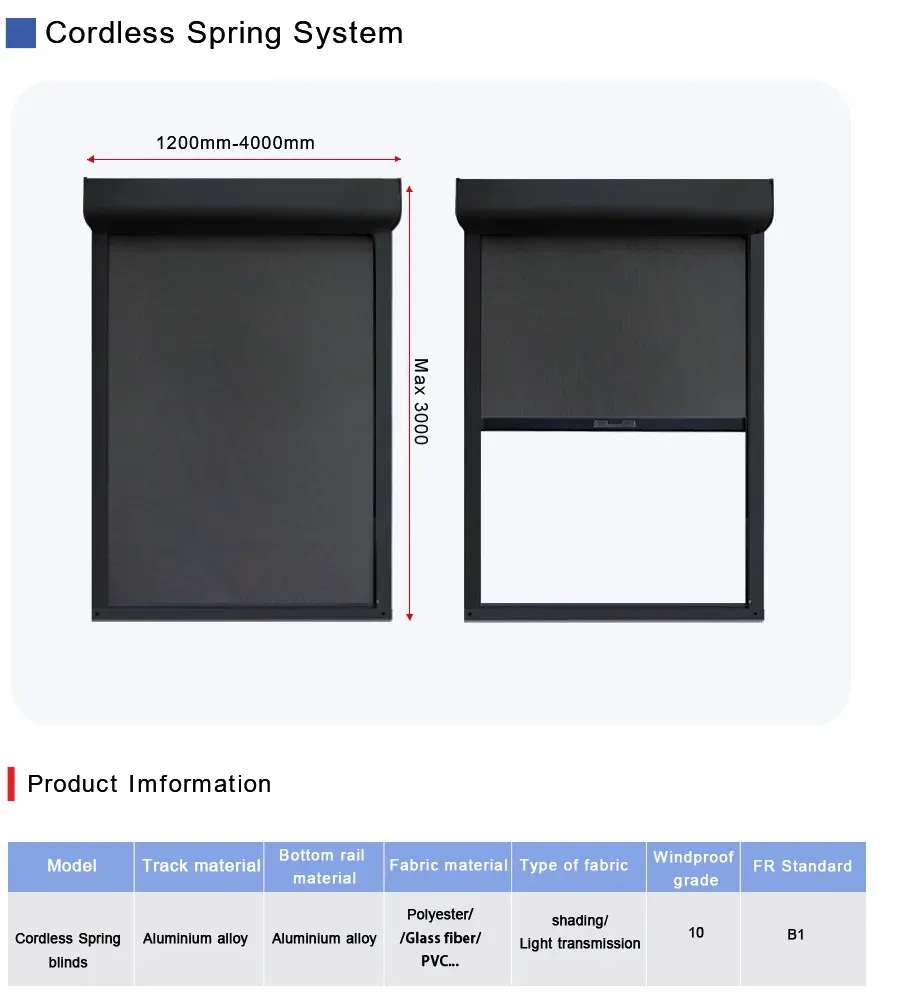
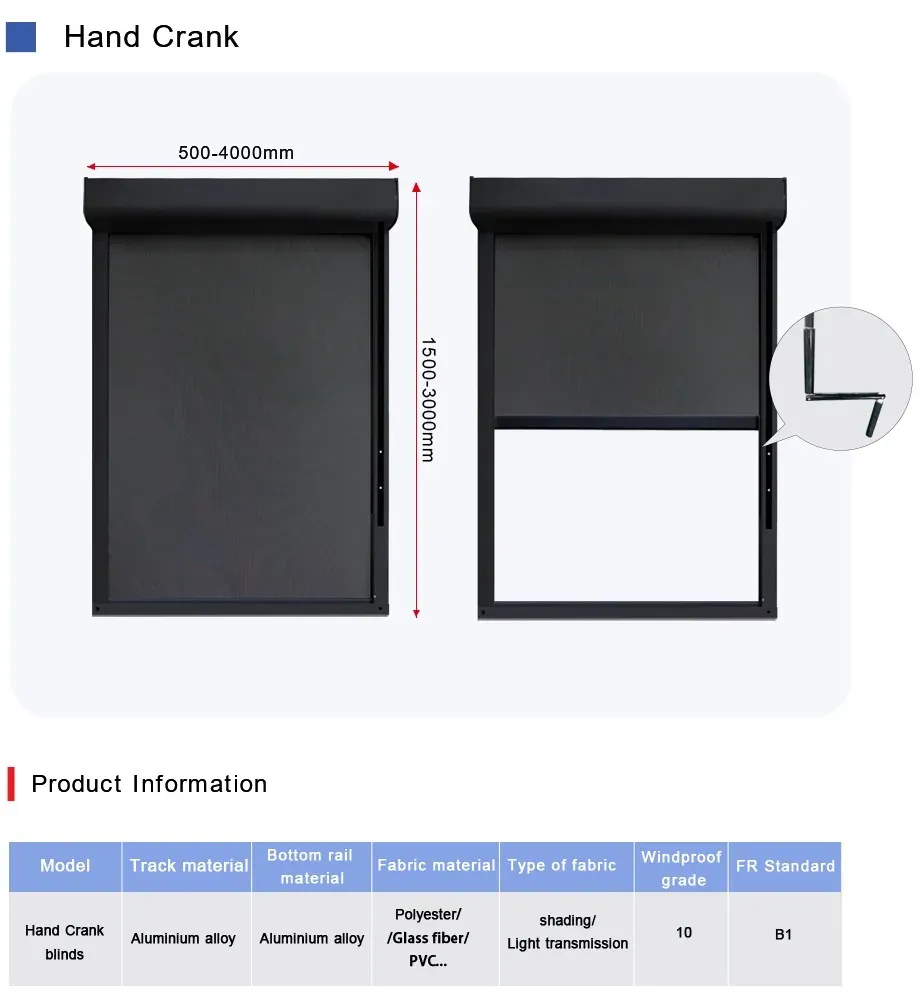
As a worked example of stated-figure disclosure, consider how the eziptrack range communicates performance boundaries. Across this portfolio the stated wind resistance is grade 10 for the manual side of the range and grade 8 for the motorized side, with each figure quoted as a classification from the manufacturer. These designations are factory classifications: stated figures rather than certified wind-pressure test reports tied to a specific project. The published fabric data sheet lists a nominal mass of 565 g/m², minimum warp tear strength of ≥2650 N per five centimeters, minimum weft tear strength of ≥2450 N per five centimeters, and a stated B1 fire-retardant classification. The manufacturer publishes no ingress-protection figure and makes no claim for storm conditions; the stated surface figures cover resistance to water, oil and wear.
Instead of a single generic catalog, the range publishes dedicated per-model drawings for each of its 8 models on individual product pages. Each package provides an exploded view, mechanism specification drawing, size table, motor parameters, and profile cross-sections. Buyers can inspect physical behavior by viewing wind load video on the system engineering features and video demonstrations page. To request engineering datasheets or factory pressure testing documentation, buyers contact raymond@eziptrack.com.
Verification FAQs
How can I tell if a wind rating is certified?
A wind rating is certified only when an independent laboratory has tested a specific specimen configuration and issued a report describing that test. In-house factory data sheets function as manufacturer classifications rather than certified results, and the two should never be presented interchangeably.
Can a single test report cover every blind size across a project?
No. Total wind load grows with the covered area, and deflection rises disproportionately as spans widen. A test conducted on a narrow sample cannot validate structural deflection limits or channel retention across wide commercial bays. Buyers must verify the tested dimensions match or exceed the scheduled site spans.
Do stated grades differ between manual and motorized models?
They can. The split between drive types is a manufacturer classification, and both figures should be read as stated ratings rather than test results. The verification step is the same for each number: ask what basis sits behind the grade before it goes into a project file.
What fabric data should accompany a wind rating submittal?
A complete submittal documents strip tear resistance along warp and weft directions, typically expressed in newtons per five centimeters. The nominal surface mass of the fabric belongs in the same package.
What documentation should be requested before issuing a deposit?
Before issuing a deposit, request the drawing set for your designated model, the manufacturer's stated classification as recorded in its product information table, and the factory pressure testing documentation available for the range. The last of these is a factory record rather than an independent laboratory report, so treat it as support for the stated figures rather than as a replacement for them. Reviewing dimensional clearances, profile wall thicknesses, and anchor spacing against your project schedule ensures proper installation without unexpected site adjustments.
Check the Paperwork Before the Deposit
Verifying an outdoor roller blind supplier's wind rating is a disciplined process of reviewing technical paperwork rather than accepting marketing claims. By confirming the rating baseline, auditing test reports for specimen dimensions, and identifying red flags early, buyers protect their projects. For commercial ordering workflows, consult our procurement preparation steps for exterior roller blinds.
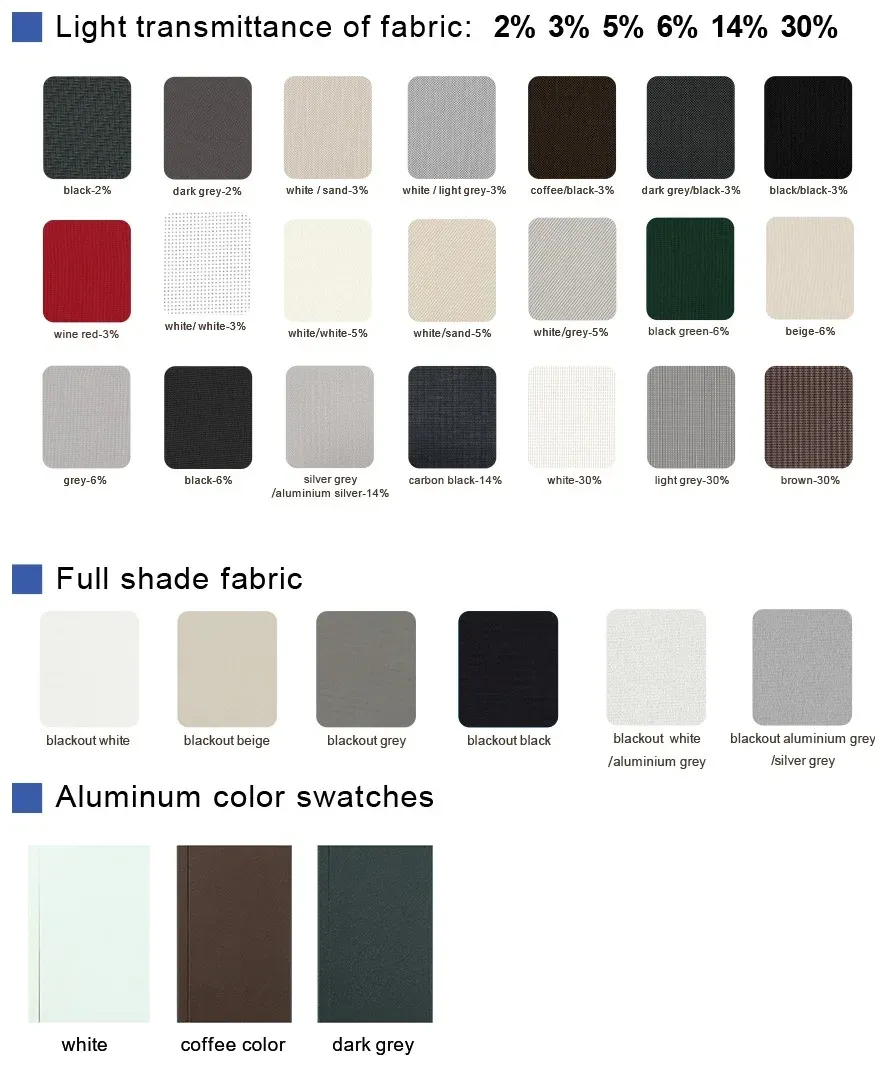
Before confirming production deposits, assemble your dimensioned opening schedule and request corresponding engineering documentation. To review model-specific drawing sets, examine factory pressure testing documentation, or evaluate fabric swatches for an upcoming installation, contact raymond@eziptrack.com or submit your schedule through our direct inquiry form.