Guides
How to Compare Windproof Roller Blind Quotes Across Suppliers
Compare windproof roller blind quotes across suppliers: the model envelope, fabric and control lines, documentation, lead-time basis and the checks that keep quotations comparable.
To compare windproof roller blind quotes across suppliers, buyers must evaluate technical line items against an identical opening schedule rather than looking at summary totals. Compare published model envelopes against required openings, verify fabric series and motor selections, demand documented test baselines alongside drawing sets, and confirm the exact basis behind every stated lead time.
What Makes Two Quotes Comparable
Procurement teams comparing exterior zip-track proposals often face substantial pricing discrepancies between competing vendors. When commercial lines sit beside technical lines, comparing the bottom-line price without verifying the engineering baseline introduces real risk. A lower total frequently reflects an undersized cassette, an unbranded motor, or an unverified fabric weave. True comparability requires an identical baseline so quotation differences reflect genuine commercial terms rather than undisclosed hardware omissions.
Achieving parity begins before inquiries reach the market. When vendors receive varied opening descriptions, they make divergent assumptions regarding fastener allowances and cassette clearances. One vendor might size for an inside recess, while another quotes face-mounted profiles requiring larger spans. To eliminate discrepancies, buyers must supply every manufacturer with a unified schedule built on our six-reading opening measurement guide. Standardizing inquiries according to established commercial inquiry preparation protocols ensures every proposal represents a complete assembly ready for installation.
The Model Line: Envelope First
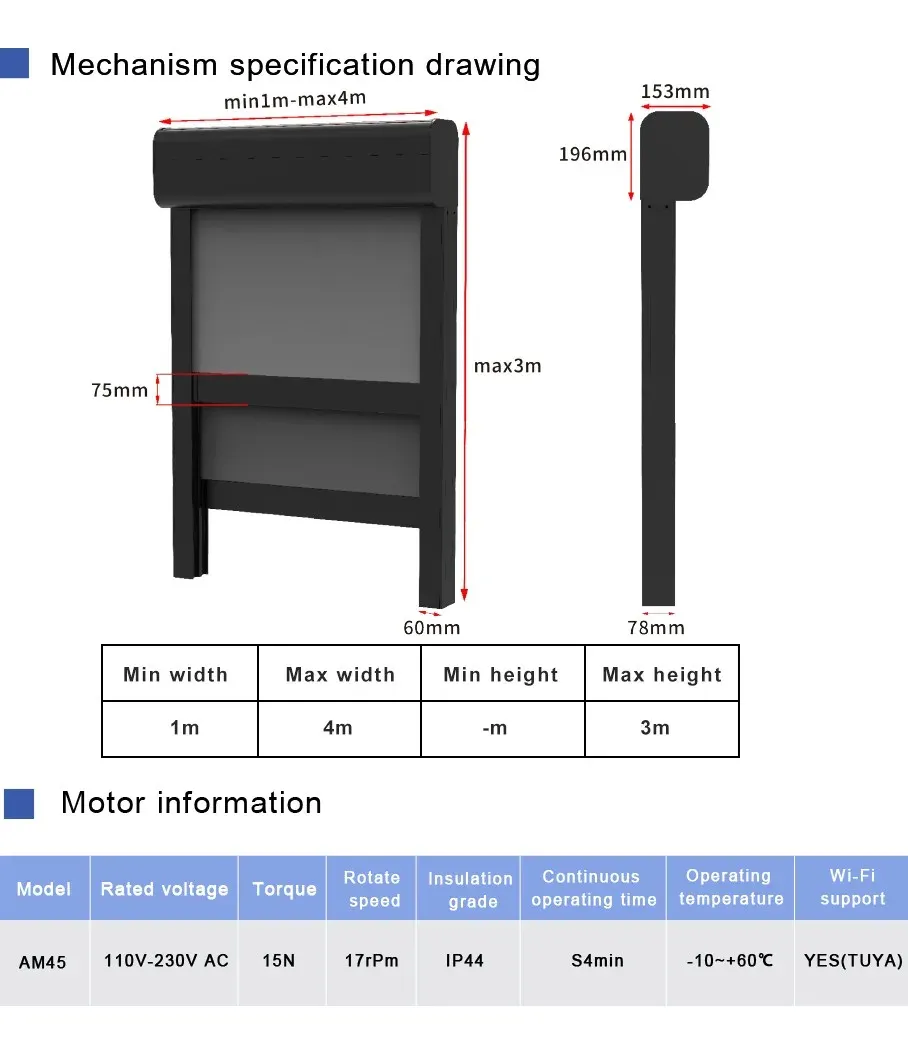
The primary hardware line on a quotation must state the system model name and its published dimensional envelope. In exterior zip-track installations, model tiers define roller tube diameters, cassette depths, and side-channel dimensions. These mechanical boundaries establish the maximum span and drop an assembly can safely handle under wind exposure. When a quotation describes a system merely as a motorized blind without identifying the model designation, buyers cannot confirm whether the hardware supports required bay dimensions.
Matching structural dimensions against system envelopes dictates whether an assembly operates reliably. Operating an exterior blind near the outer boundary of a compact cassette increases tube deflection, and a deflected tube shows up as fabric sag across the span. Buyers must cross-check quoted models against verified dimensional boundaries and sizing guidelines. For example, the published size tables for all 8 models define width and drop boundaries directly on product pages, which keeps an undersized system from being pushed beyond its designed limits.
Fabric, Control and Mounting Lines
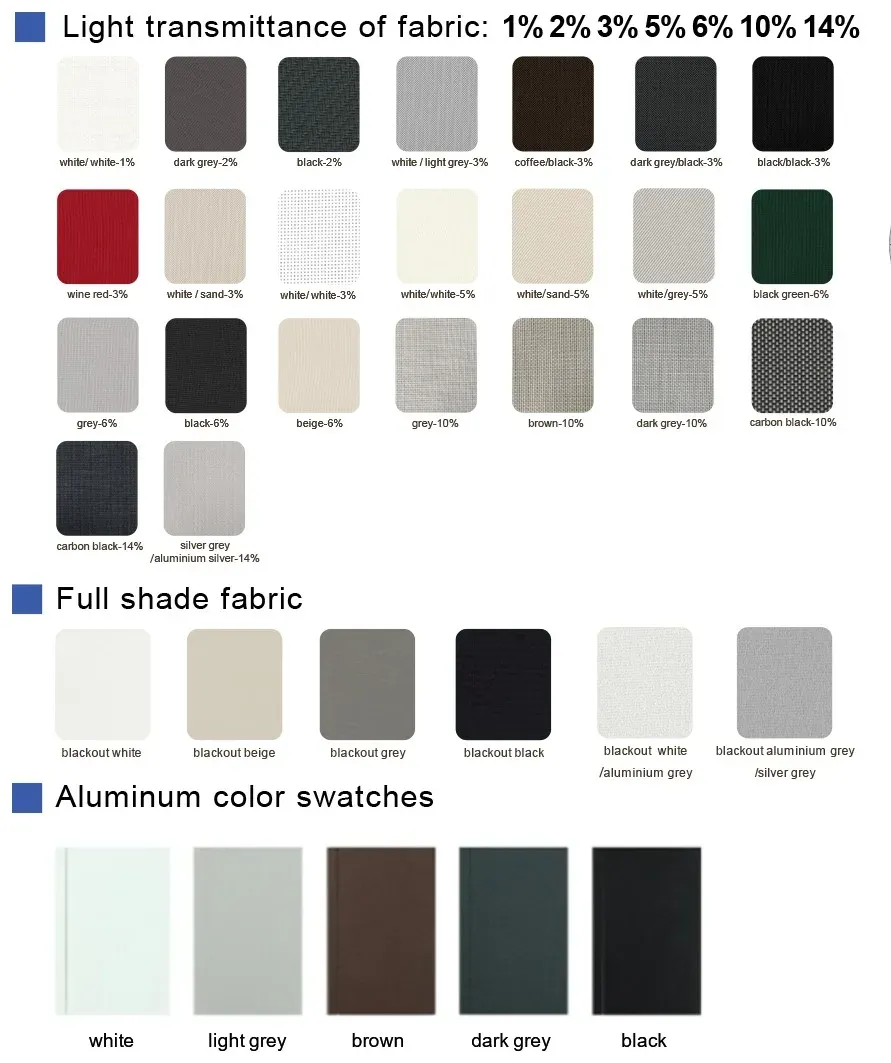
The fabric line item requires technical definition across four parameters: composite textile series, stated transmittance percentage, nominal fabric mass, and specific colour code. A quotation listing an attractive price while describing fabric as merely heavy-duty polyester conceals critical variables that govern outdoor longevity. Commercial quotations must provide concrete material data rather than promotional adjectives. For example, the published figures for this range give a nominal mass of 565 g/m² together with strip tear values of ≥2650 N along the warp and ≥2450 N along the weft, on a five-centimetre gauge, plus stated resistance to water, oil and wear.
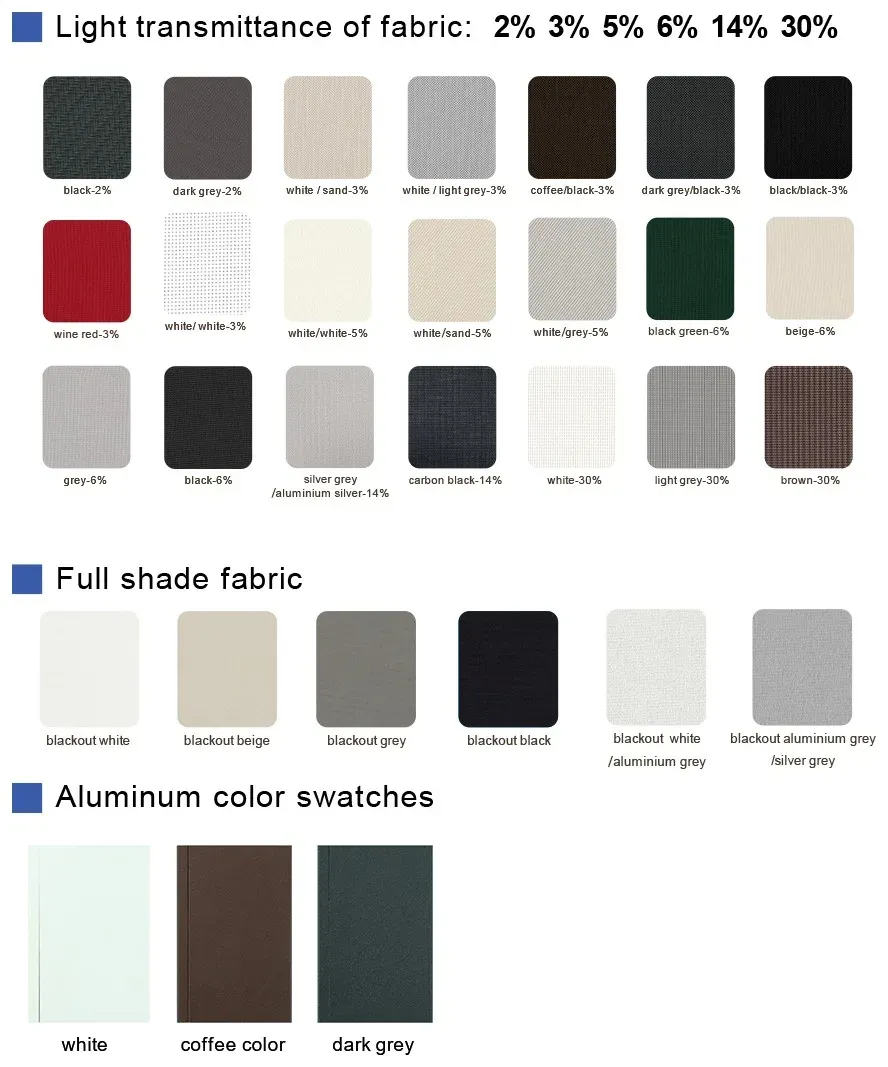
Fabric colour specifications must cite an eight-digit colour designation code rather than ambiguous terms like charcoal or dark grey. Demanding exact colour codes and verified material properties prevents vendors from substituting low-grade dyed fabrics that lack tear resistance or fade prematurely under outdoor solar radiation.
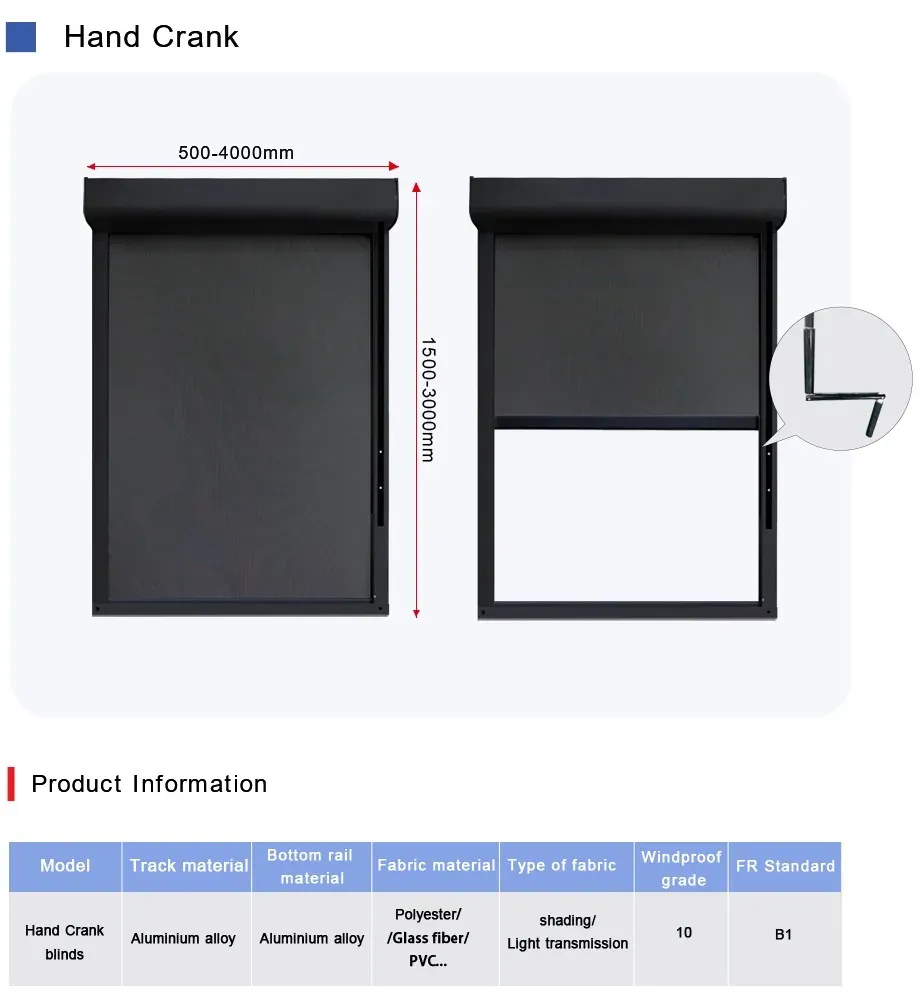
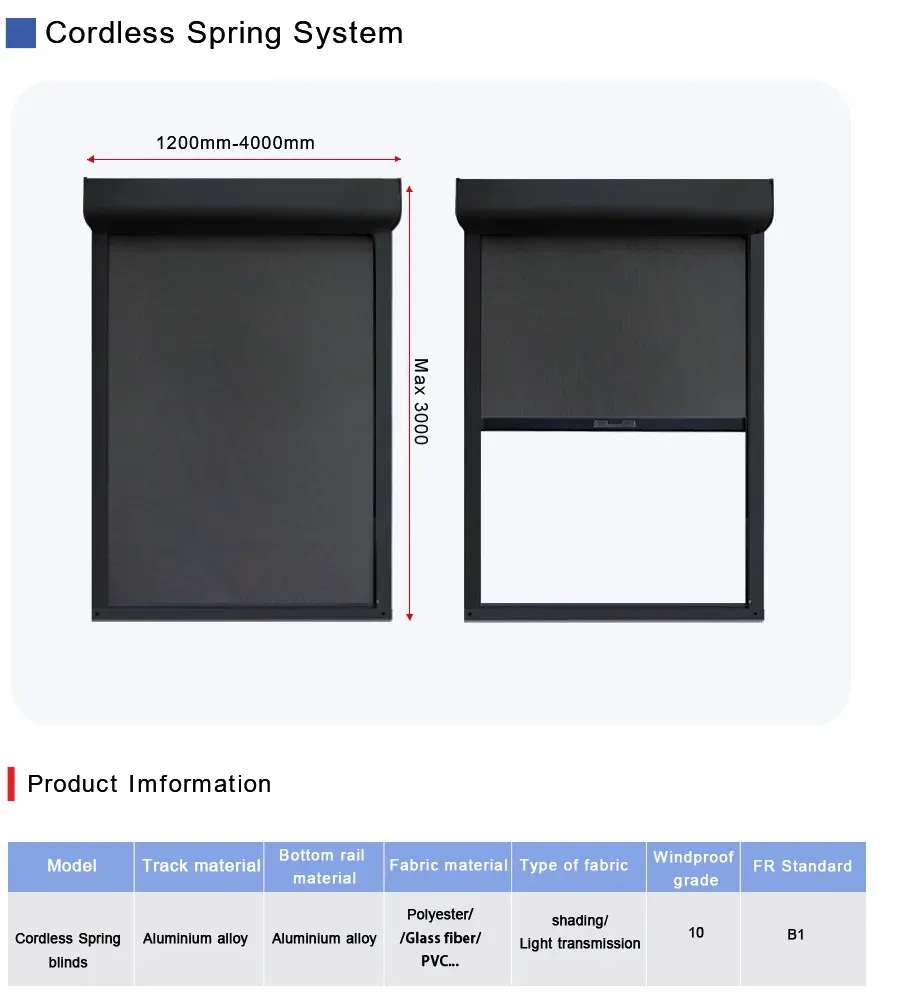
The control and mounting lines demand equal precision across every proposal. Motorized quotations must record tubular motor models, output torque, operational voltage, and control interfaces, while manual proposals must specify a hand crank drive or a cordless spring mechanism.
The mounting lines must define inside recess fixing or outside face-mounted profiles with bracket preparations. Omitting mounting geometry or drive details leaves buyers vulnerable to unexpected site modifications during installation.
Documentation and the Lead-Time Basis
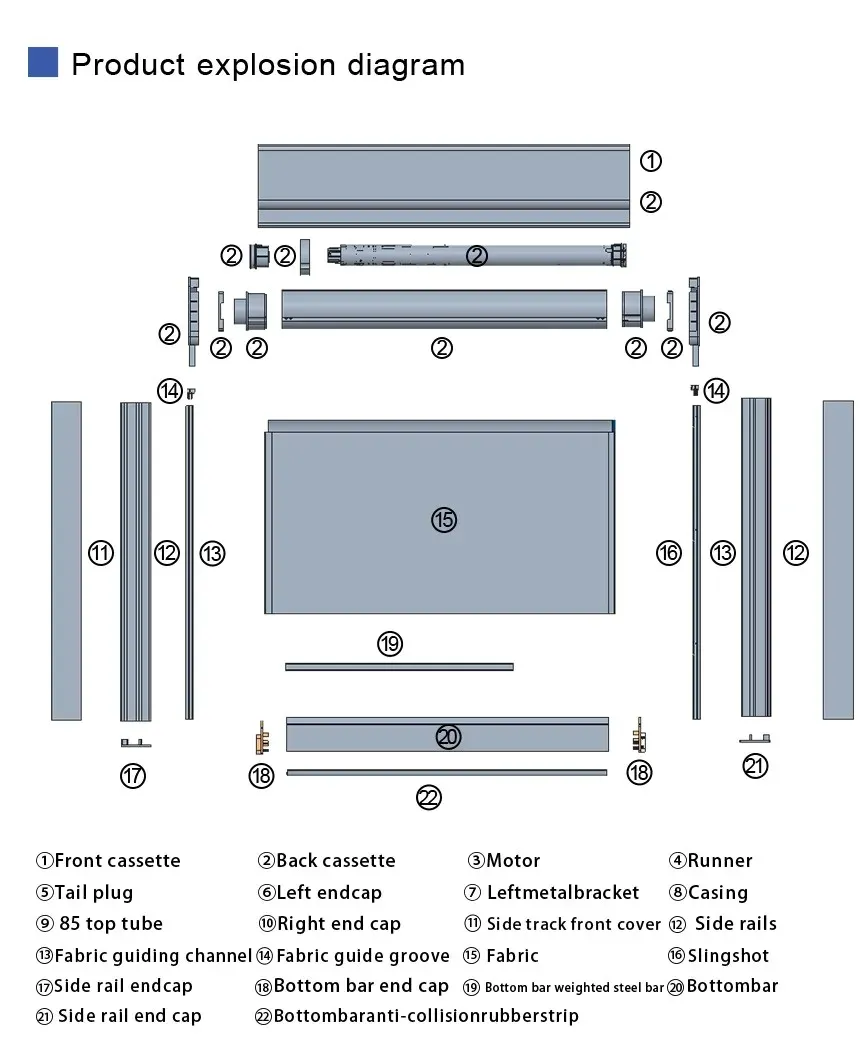
A thorough quotation comparison extends beyond component hardware to examine the technical documentation package included with the proposal. Reputable manufacturers support proposals with comprehensive submittal packages that permit architectural verification prior to fabrication. For instance, the drawing set published for each model in this range carries six sheets: an exploded component view, a mechanism specification drawing, a size table, motor parameters, profile cross-sections, and a catalogue product information table. Procurement managers should evaluate whether proposals conform to published submittal drawing and engineering documentation standards before accepting a quotation.
When quotations cite structural performance, buyers must confirm whether those figures reflect factory classifications or independent laboratory evaluations. For example, across the eziptrack range, stated wind resistance is designated as grade 10 for manual models and grade 8 for motorized models, quoted strictly as manufacturer classifications supported by factory pressure testing documentation rather than certified laboratory results. This distinction prevents misunderstandings regarding structural capabilities. Buyers can cross-examine vendor performance claims by reviewing established structural wind load claim evaluations.
The lead-time line item represents another area where quotation comparability frequently breaks down. Suppliers often quote delivery durations without clarifying the operational milestone that triggers the production schedule. Across the eziptrack range, a stated 7–15 day lead time applies once all project dimensions are verified and the physical configuration confirmed before anything is made. Buyers who need to review physical swatch books, examine engineering datasheets, or inspect factory pressure testing documentation can request these records by contacting raymond@eziptrack.com.
When two proposals still diverge after the same list has gone out, put the difference back in writing rather than moving on. Ask each supplier to restate the component behind the gap, in writing, and keep those answers beside the quotation. A written restatement separates a genuine commercial difference from a description that was never specific enough to compare in the first place.
Quote Comparison FAQs
Why do quotations for identical opening dimensions show different hardware lines?
Quotations differ when vendors match openings to different structural hardware classes rather than equivalent profiles. One supplier may quote an entry-level compact cassette operating near its dimensional boundary, while another specifies a reinforced profile designed for wide spans. Buyers should inspect the published model envelope rather than comparing summary figures alone.
What fabric details must appear on a quotation line to make it comparable?
The costliest omission is the colour code: without it a supplier can deliver a shade that never matches the approved sample. Next is the stated transmittance percentage, since a different openness changes both the view and the heat behind it. A quotation that leaves either one blank is not yet comparable.
How should buyers evaluate stated lead times between different suppliers?
Ask each supplier where the clock starts: at the confirmed order, at fabric approval, or at another milestone. A figure without a defined starting point cannot be compared with a stated 7–15 day lead time, and the missing milestone is worth raising before you shortlist a supplier.
Can a quoted wind rating line replace engineering submittal documentation?
No, a quoted wind rating represents an unverified classification unless accompanied by drawing packages and test documentation. Buyers must request mechanism drawings and factory pressure records to confirm how the screen resists lateral air pressure. Relying on an isolated performance label without supporting technical paperwork exposes outdoor projects to structural failure.
How should buyers respond when a quotation lists generic components instead of specific brands or series?
Buyers should return the quotation with a formal request to identify every unspecified hardware and fabric item. Requesting exact motor models, fabric series names, and profile thicknesses forces vendors to eliminate hidden downgrades before production begins. If a supplier refuses to replace ambiguous descriptions with explicit technical identifiers, exclude that quotation from your procurement comparison.
Send the Same List to Every Supplier
Conducting a quotation comparison requires enforcing disciplined technical transparency across every proposal. Rather than accepting high-level summaries that conceal downgrades, procurement teams must demand granular disclosures covering model envelopes, fabric properties, drive mechanisms, and documentation packages. Structuring every inquiry around the same opening list is what keeps suppliers honest: identical engineering criteria in, comparable line items out, and no room for downgrades to hide between proposals.
Before finalizing vendor selections or approving fabrication schedules, compile your verified opening dimensions into a unified schedule and require each manufacturer to complete identical specification lines. Bring one list to every supplier: verified openings, envelope checks and documentation requests belong in a single message. Start it on our contact page, or put the same list in an email to raymond@eziptrack.com.