Guides
How to Evaluate a Windproof Roller Blind Sample Before Ordering
Evaluate a windproof roller blind sample before ordering: what to request, how to read swatches against the stated fabric data, colour codes, surface properties and the step from sample to order.
To evaluate a windproof roller blind sample before ordering, buyers should verify the physical swatch against stated technical data, match the eight-digit colour code to quoted specifications, inspect zipper edge welding, and observe surface resistance. Swatches verify material quality and appearance, but whole-system wind resistance must be confirmed through engineering documentation.
What You Can Request Before Ordering
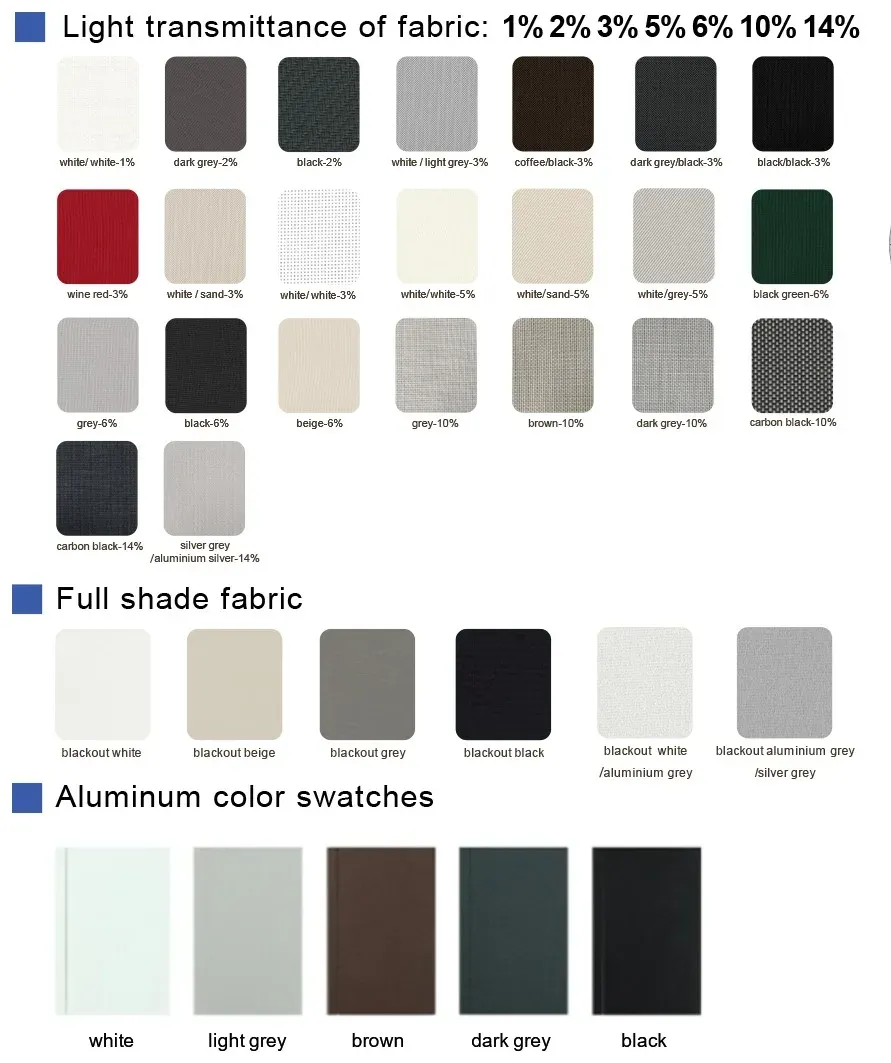
Before committing capital to an exterior shading project, procurement teams must know what physical references and technical papers a manufacturer can supply. Commercial buyers often begin without baseline materials, so evaluation starts by separating the free digital assets from the physical samples. The foundational digital asset is the thirty-page colour card PDF on the swatch and shade selection options page, presenting photography and specifications across the full fabric collection.
When physical evaluation is needed for finishes schedules or client approvals, swatches can be ordered for a fee by email enquiry; write to raymond@eziptrack.com to request them or to review the factory pressure testing documentation.
Fabric swatches answer questions about textile texture and hue, but reveal nothing about the mechanical profiles enclosing the opening; those come from the model-specific drawings, not from brochures. Complete drawing packages for each of the 8 models, from exploded views to profile cross-sections, are published openly on individual product pages.
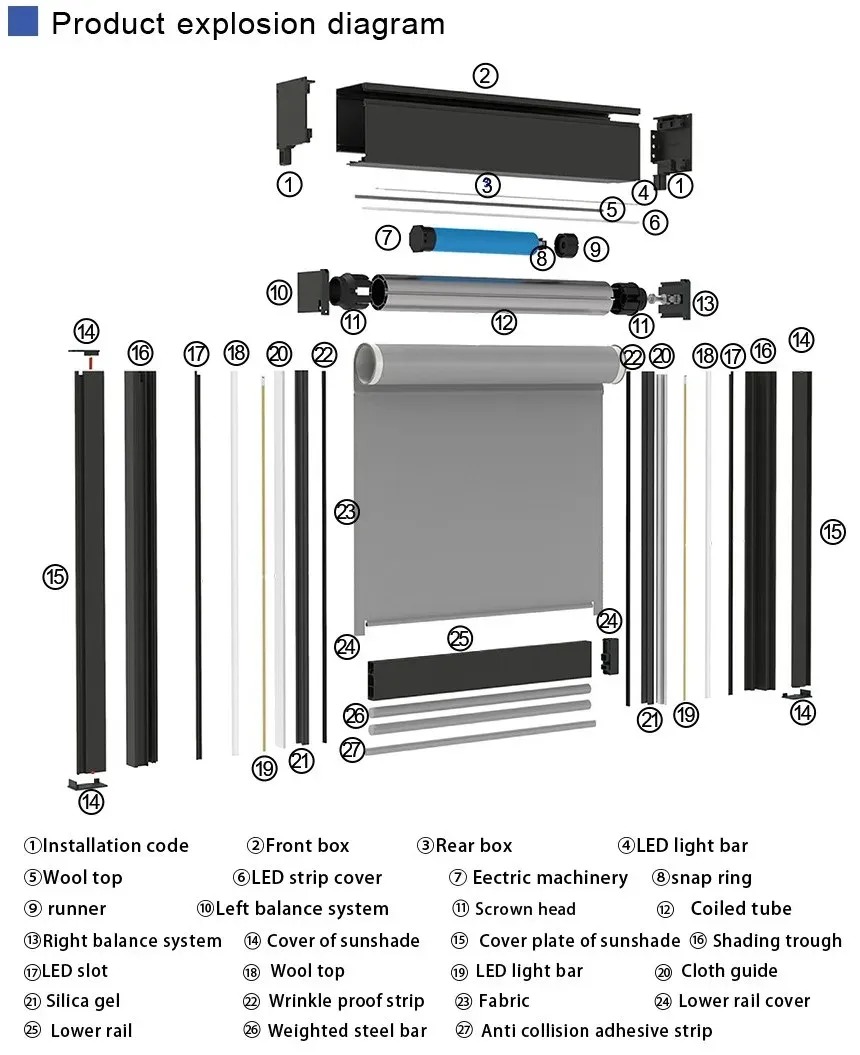
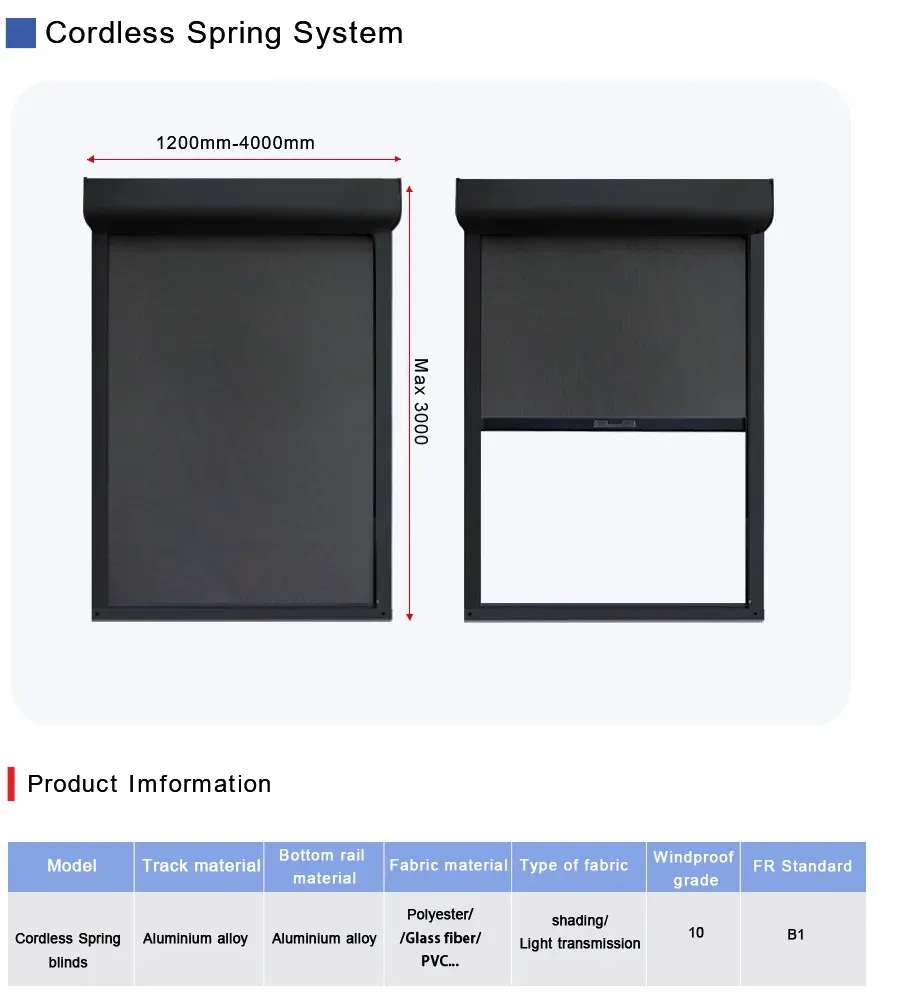
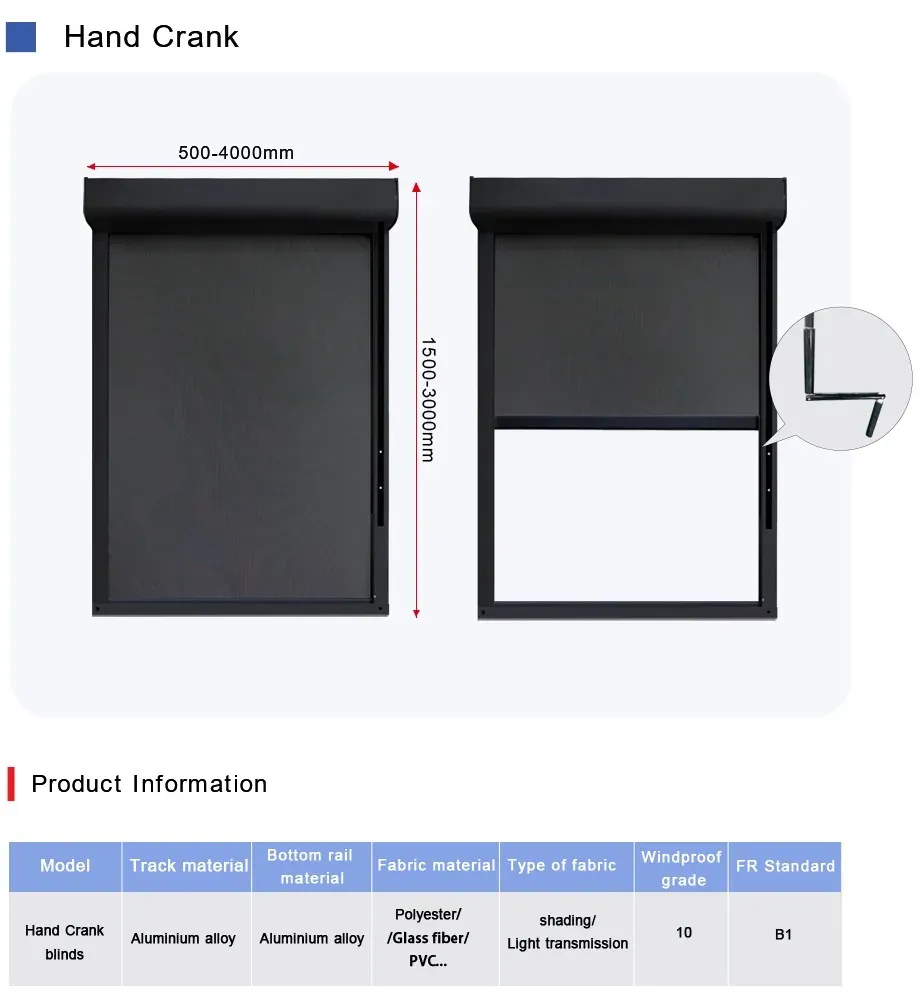
A thorough pre-order review pairs the swatches with the documented specifications: the catalogue product information table details the track and bottom rail materials and the stated wind classifications, so opening fit and substrate attachment can be confirmed before the order advances. For documentation workflow guidance, see our commercial procurement guide for windproof roller blinds.
Reading a Swatch Against the Stated Data
When a physical swatch arrives, the first quantitative check is its mass against the published figures. Measure the swatch's length and width, weigh it on a gram scale, then divide the reading by the area in square metres: a ten-by-ten-centimetre specimen should read about five point seven grams at the stated nominal mass of 565 g/m². A reading well below that points to a lighter substitute weave than the one specified.
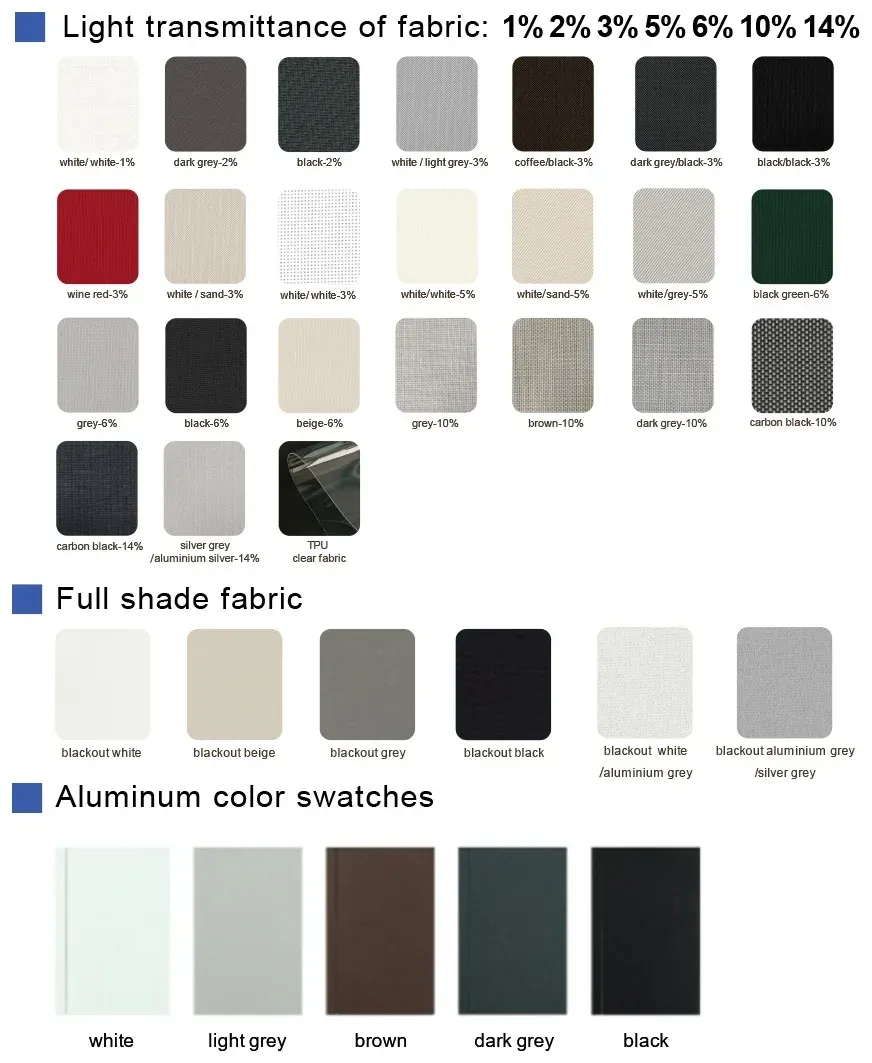
Beyond nominal mass, visual and tactile inspection reveals the structural consistency of the weave. Hold the swatch against daylight and backlighting to examine yarn uniformity and coating coverage; even yarn spacing is what keeps solar filtering free of gaps and streaks. Comparing weave structures across composite categories is detailed in our breakdown of composite exterior screen fabric series.
In windproof zip-track blinds, lateral fabric retention depends on zipper teeth welded along both vertical edges. If a sample includes an edge detail, buyers must scrutinize this welded zipper seam with care. The weld between the zipper tape and the composite textile must show continuous adhesion without edge lifting, bubbles, or brittle polymer excess. A defective weld seam compromises retention inside the side channels and raises the risk of fabric blowout under wind load.
Published material sheets also quote mechanical strength, including minimum warp tear resistance of ≥2650 N per five centimeters and minimum weft tear resistance of ≥2450 N per five centimeters, alongside a stated B1 fire-retardant classification. A handheld swatch cannot be pulled apart manually to verify these mechanical thresholds; that figure comes from laboratory tensile equipment, not from bench handling. Physical handling does show whether the textile has the substantial body expected of a reinforced composite weave.
Checking Colour with the Eight-Digit Code
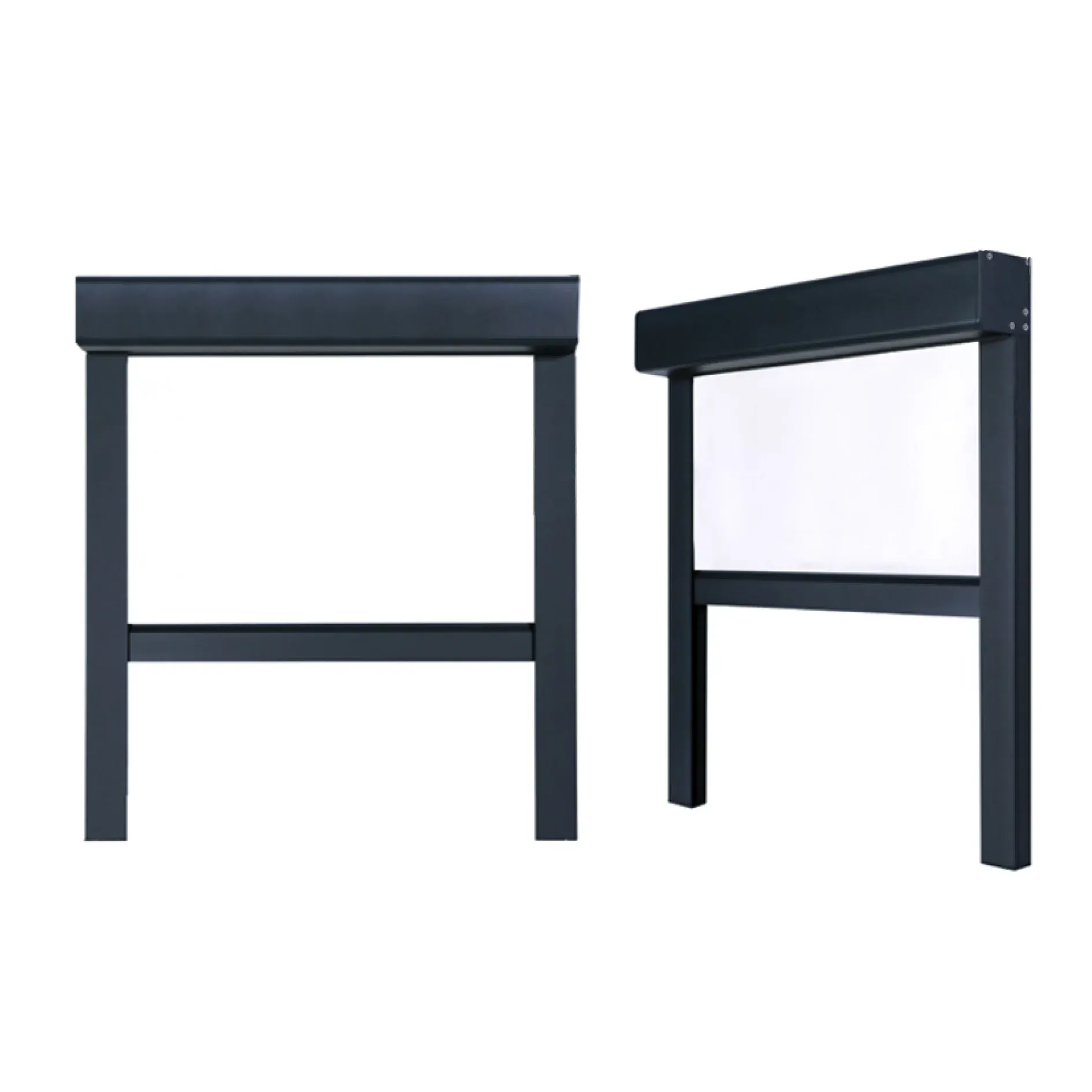
The exterior fabric collection spans 24 colour codes, each shade identified by a unique eight-digit code. Casual colour names read differently across submittals, contractor schedules and production workshops, so the label code is the only reference worth checking. Cross-referencing the eight-digit code on the sample label against the quotation keeps the ordered shade identical to the quoted one.
Disciplined code verification is particularly critical on large architectural facades and multi-phase developments. Where later phases or replacement panels must match the original facade, that workflow is covered in our detailed review of outdoor roller blind colour consistency.
Fabric colour evaluation must also be coordinated with aluminium cassette and side-track finishes. Frame finishes are specified per model, and matching the cassette finish to the fabric belongs in the same review. Evaluating the physical swatch against the intended frame finish ensures the completed assembly complements adjacent building elements before the purchase is confirmed.
The fabric documentation also states an ISO 105 B02 Grade 8 light fastness classification, a measure of colour stability under standardized test lighting. Even at that top grade, years of intense ultraviolet exposure shift every exterior fabric gradually, and orientation, daily sun hours and climate all influence the pace. Setting expectations on that during sampling avoids disputes after installation.
Surface Properties a Small Sample Can Show
While mechanical pull tests require specialized fixtures, practical surface characteristics can be observed on a small swatch. Water repellency is checked by placing droplets on the textile face: on this dense composite weave they bead tightly rather than soaking into the core yarns. The published fabric data states resistance to water, oil and wear; beading is that claim made visible.
Staining and friction can be assessed on the same bench basis. Light friction from a blunt edge should not scuff, flake or delaminate the protective polymer coating, and an oily residue should wipe away without staining the weave.
Crucially, procurement teams must recognize what a small fabric swatch cannot demonstrate: whole-system wind resistance under lateral load. Whole-system behaviour depends on the assembled unit: the fabric, its welded edges and the side channels acting together, which is exactly what a swatch leaves out. How the assembled system handles wind loads is covered in our mechanical analysis of zipper-guided roller blind systems.
Across this product range, the stated grades are 10 for the manual models and 8 for the motorized ones. These designations represent factory classifications for fully assembled units rather than certified laboratory test reports for isolated swatches. Furthermore, the product range makes no claim for storm conditions and carries no ingress protection rating. For a rigorous methodology on auditing structural claims, review our methodology for verifying supplier wind ratings.
Sample FAQs
Can a small fabric swatch demonstrate wind load resistance?
No. A swatch can show weave density, coating and colour, but wind resistance belongs to the assembled unit, where the fabric edges sit captured in the side channels. Judge that from the model drawings and the factory testing documentation instead.
What should buyers examine on the welded zipper edge of a sample?
Examine the welded edge first because it carries the lateral load once the blind is installed. If the sample shows any defect along that weld, request a replacement swatch before ordering: an edge that already looks imperfect on a small sample is not the edge to approve for production.
Why is the eight-digit colour code necessary when ordering?
The eight-digit colour code provides an exact technical reference that prevents confusion between quoted specifications and production batches. Descriptive colour names are subjective and can result in mismatched shades across phased deliveries or replacement orders. Referencing the exact eight digits ensures that the fabric produced matches the approved sample card precisely.
How can physical fabric swatches be requested for evaluation?
Physical fabric swatches can be ordered for a fee by sending an email enquiry to raymond@eziptrack.com. Procurement teams should specify the fabric series and eight-digit colour codes required for their project review. Digital swatches and weave technical parameters can also be examined immediately by downloading the thirty-page colour card PDF.
What documentation should accompany a fabric sample before approving an order?
A fabric sample review should be accompanied by the model-specific drawing set and the catalogue product information table for the designated unit. Specifiers should also evaluate the stated fabric data sheet covering nominal mass, tear resistance, and fire classifications. Reviewing geometric clearances alongside physical swatches ensures that material properties and structural fit are verified before production starts.
From Sample to Confirmed Order
After approving physical swatches, verifying the eight-digit colour code, and inspecting edge weld quality, procurement moves to the final ordering stage. Specifiers must consolidate opening dimensions, designated model envelopes, frame finishes, and fabric selections into an opening schedule. Gathering complete geometric data prevents revisions once manufacturing begins, ensuring that each exterior screen fits its designated opening.
For this range, stated lead times apply once every opening figure and hardware configuration is verified. Aligning the verified eight-digit colour code with the stated transmittance percentage and opening dimensions keeps project-scale deliveries tied to the same references.
Have swatches to check against a finishes schedule, or drawings to review before an order? The opening schedule and your chosen codes fit in one message to raymond@eziptrack.com, or go through the enquiry page if that is easier.