Oct 12, 2026Guides
Measuring for a Windproof Roller Blind: Six Readings, One Review
Measuring a windproof roller blind: record the opening, not the glass, at six points to the millimetre, then send the figures for review before production.
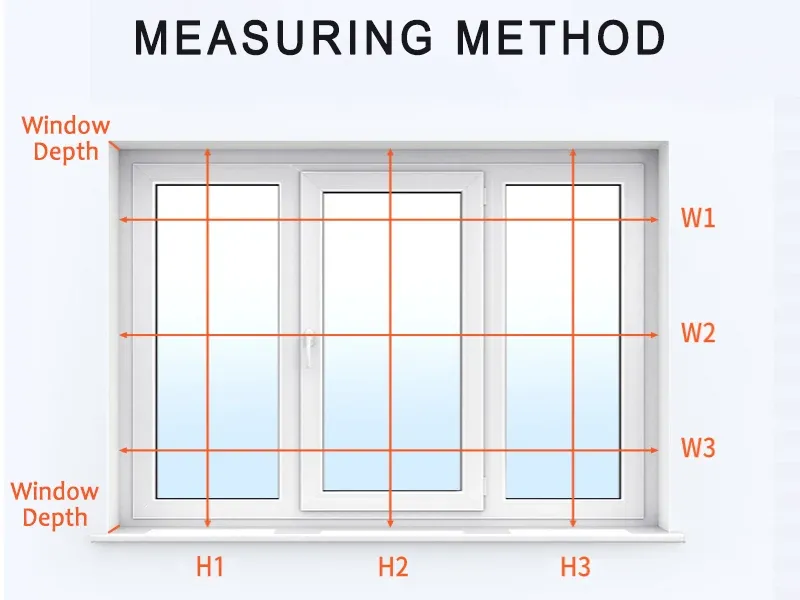
Measuring for a windproof roller blind means recording the structural opening, not the glass, at six points: three width readings and three height readings, taken to the millimetre. Because the fabric runs inside fixed aluminium side tracks, each unit is made to the measured opening rather than adjusted on site, and the figures are reviewed and confirmed before production.
Made to the Millimetre, Not Adjusted on Site
Measurement accuracy matters on this system because the fabric travels inside fixed aluminium side tracks. Each blind is made to the opening that was measured rather than adjusted on site, so widths and heights are recorded to the millimetre. Small errors show up as track misalignment or uneven fabric tension.
That is why the figures are treated as a specification rather than an approximation. The side tracks are fixed to the structure and the fabric travels inside them, so there is no on-site trimming step where a small error is absorbed. A reading taken in a hurry, or taken against the wrong surface, arrives as a real dimension, and the finished blind is built to it. Nothing on the fitting day changes that, which is why the numbers get the attention they do.
Both width and height are recorded as their own figures, and the order that follows carries them into production, where the blind is made to them. The discipline at measuring stage is to write down the opening exactly as found, without tidying the numbers up afterwards.
The habit that keeps trouble out is simple: measure carefully, write every reading down, and treat each opening as its own specification. A site with several openings is several sets of figures, not one figure copied from opening to opening.
A measuring sheet for one opening is short: the width points, the height points, and the depth of the recess where the diagram calls for it. What makes it dependable is that nothing on it is estimated. Every figure is a reading taken at the opening, written down as found, and the review that follows works from exactly those numbers.
What the range covers, model by model, is set out on the products page, and the model sizing guide matches a surveyed opening to the units that cover it.
The Opening Versus the Glass: What Counts
Measure the window opening, not the glass. All formulas use window width (WW) and window height (HW). Glass size is not used.
That single rule settles the most common measuring question. The blind fixes to the opening or the frame around it, so the figures must describe that surface. Measure the opening or frame it will fix to, not the glass: an inside installation works from the clearance within the frame, while an outside installation measures across the outer face of the opening. Record both width and height before ordering.
From the same opening, the finished size is then calculated differently for an inside installation within the frame and an outside installation over the frame. The two sets of figures are not interchangeable, which is why the mounting method is settled before the measuring sheet is read against the site.
The measuring method guide walks through both approaches, and the ordering guide sets out how the figures feed into a quotation. Read the two together before surveying: one sets out which surface to measure, and the other shows where the figures sit in the order.
Reading the Opening at Six Points
Ordering a windproof zip-track roller blind means measuring the opening width and height at several points, because openings are rarely square. Measurements are taken across three horizontal points, W1 to W3, and three vertical points, H1 to H3.
The six readings are the drawing's own shorthand. W1-W3 are three width readings, taken left to right. H1-H3 are three height readings, taken top to bottom. The diagram also labels window depth, the depth of the recess, so the opening is described in three dimensions rather than two.
A single reading per dimension would describe a perfect rectangle. The method asks for three positions because it does not assume one. Each point keeps its own number, recorded to the millimetre, and the spread between the readings is read as information rather than rounded away. It is that spread which shows how the opening actually sits, while the schedule can still be adjusted.
Every opening on a project is surveyed the same way, so a facade of mixed sizes carries its own figures for each one. Matching those figures to a model is covered in the model sizing guide, which pairs each opening size with the units that cover it.
Why three points rather than one? Because openings are rarely square, and a single figure at one position would describe one spot rather than the opening. The three readings turn that single number into a small set, and it is the set that carries the information about how the opening actually sits.
When the Opening Is Out of True
Openings are rarely square, and an out-of-square opening affects how the side tracks sit. Measure the width at three points, W1 to W3, and the height at three points, H1 to H3, then record all six numbers. Use the smallest relevant figure for the chosen mounting method.
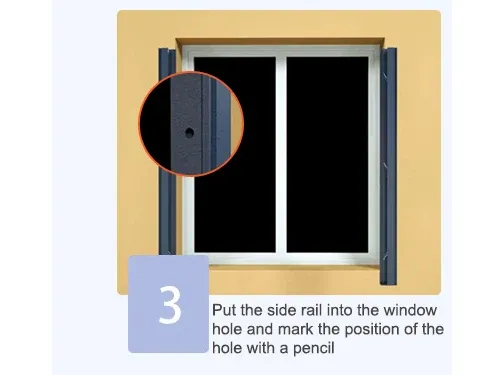
None of this asks the surveyor to average, round or correct the readings. Record what the opening does: the full set of numbers, as they are. The variation is information, and it tells the review where the opening is out of true. The tracks have to end up plumb for the tensioned fabric to run freely, and the figures are where that alignment begins; the installation guide covers the alignment checks that follow at fitting stage.
Sending every reading keeps the decision with the people who make the blind. Where the width readings disagree, or the height readings do, the figures show it while the order is still being prepared. And where a reading looks unusual, a photo sent with the schedule shows the reason, which is the fastest way to close the question.
The Review Before Production
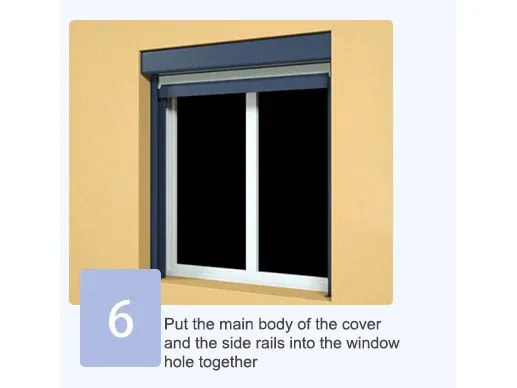
The figures are not the end of the process. eziptrack reviews the figures and confirms the configuration before production. The review ties the numbers to the chosen model, mounting method, fabric and frame colour, and it is where questions about an unusual opening are settled.
For a buyer, the practical meaning is that the measurements become a confirmed configuration rather than an assumption. The review is the checkpoint that replaces guesswork: the figures stop being field notes and become order data, and the confirmation is what the quotation and the production schedule are built from.
The review reads the schedule the same way the fitter will: each opening's figures, the mounting method chosen for it, and the fabric and frame preferences that go with it. That is why the figures are asked for alongside the other order details rather than on their own. The confirmation covers the configuration, and production follows the confirmed version.
The figures travel with the order: send the width and height of each opening, the preferred fabric transmittance and frame colour, and the team confirms the configuration and provides a quotation. A multi-opening schedule keeps each opening's own recorded figures. The ordering guide covers that flow from opening schedule to shipment, which the site lists at a lead time of 7–15 days.
Measuring FAQs
Why not use the glass size?
Because the glass is not the mounting reference. The unit mounts to the opening or its surrounding frame, so a pane measurement describes a surface the hardware does not use.
Which of the numbers do I send?
Every reading from each opening, with both width and height covered. The figures go in as recorded, and the spread between the points is part of what the review reads.
Are the figures reviewed before manufacturing?
Yes. The figures are reviewed and the configuration confirmed before production, so the order data and the finished blind trace back to the same numbers.
Can I send photos for a check?
Yes. Email raymond@eziptrack.com with your window opening sizes and photos. We can help you check your numbers. Photos and figures are read together: the readings describe the opening, and the photos show the site conditions around it.
Send the Six Numbers
Accurate measuring is the shortest path through this system: the fabric travels inside fixed tracks, the blind is built to the figures, and the figures are reviewed before production. The full set of readings per opening, recorded to the millimetre, is what the process runs on.
Write to raymond@eziptrack.com with the opening sizes and site photos, or use the contact us page. A complete schedule carries the six readings for each opening, with the fabric and frame preferences beside them, and photos where they help. Send those, and the confirmation comes back against the numbers you recorded.